Bihar MLC Election: NDA Faces Coordination Questions After JD(U) Dispute and Alliance Meeting Absences
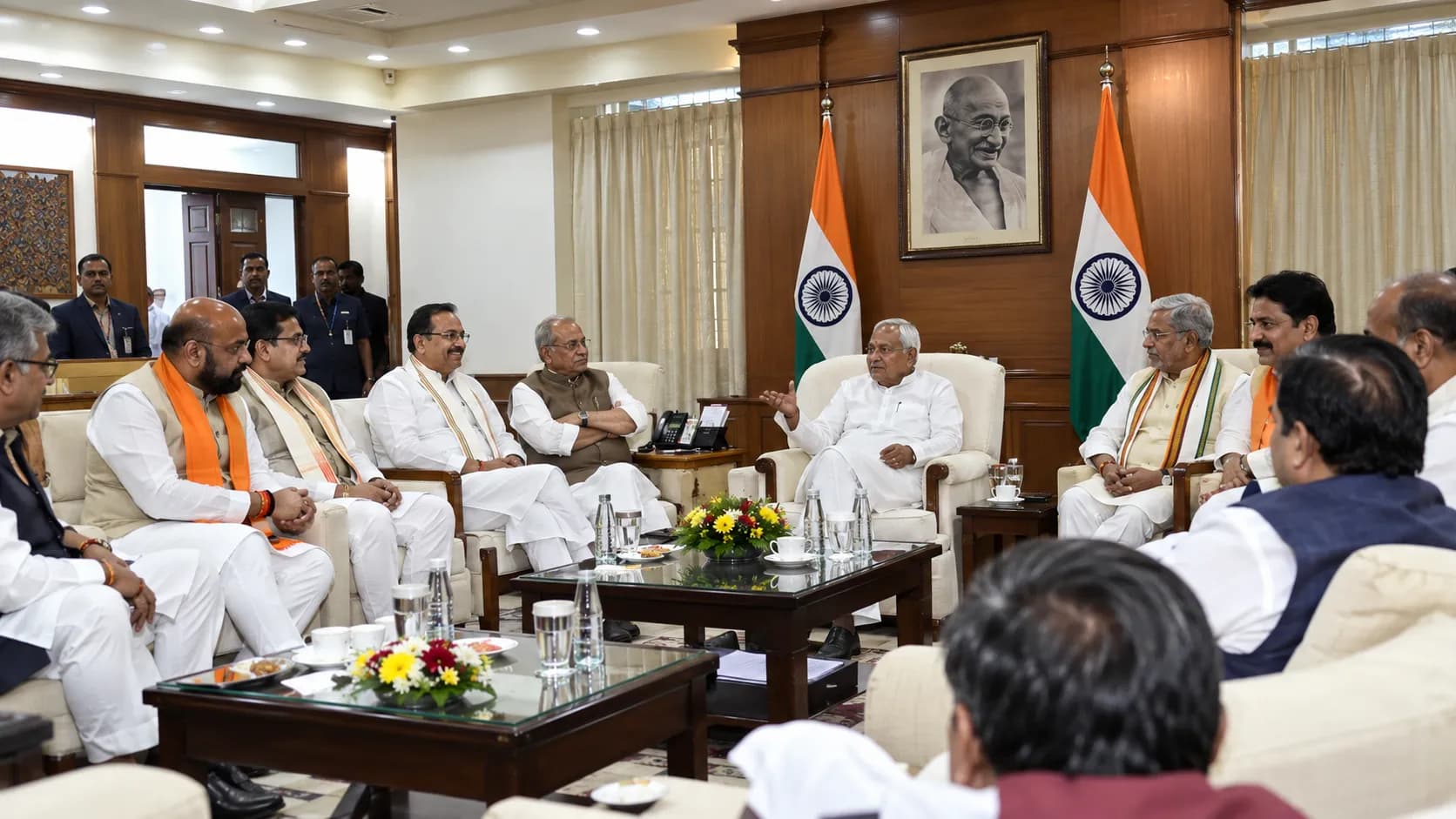
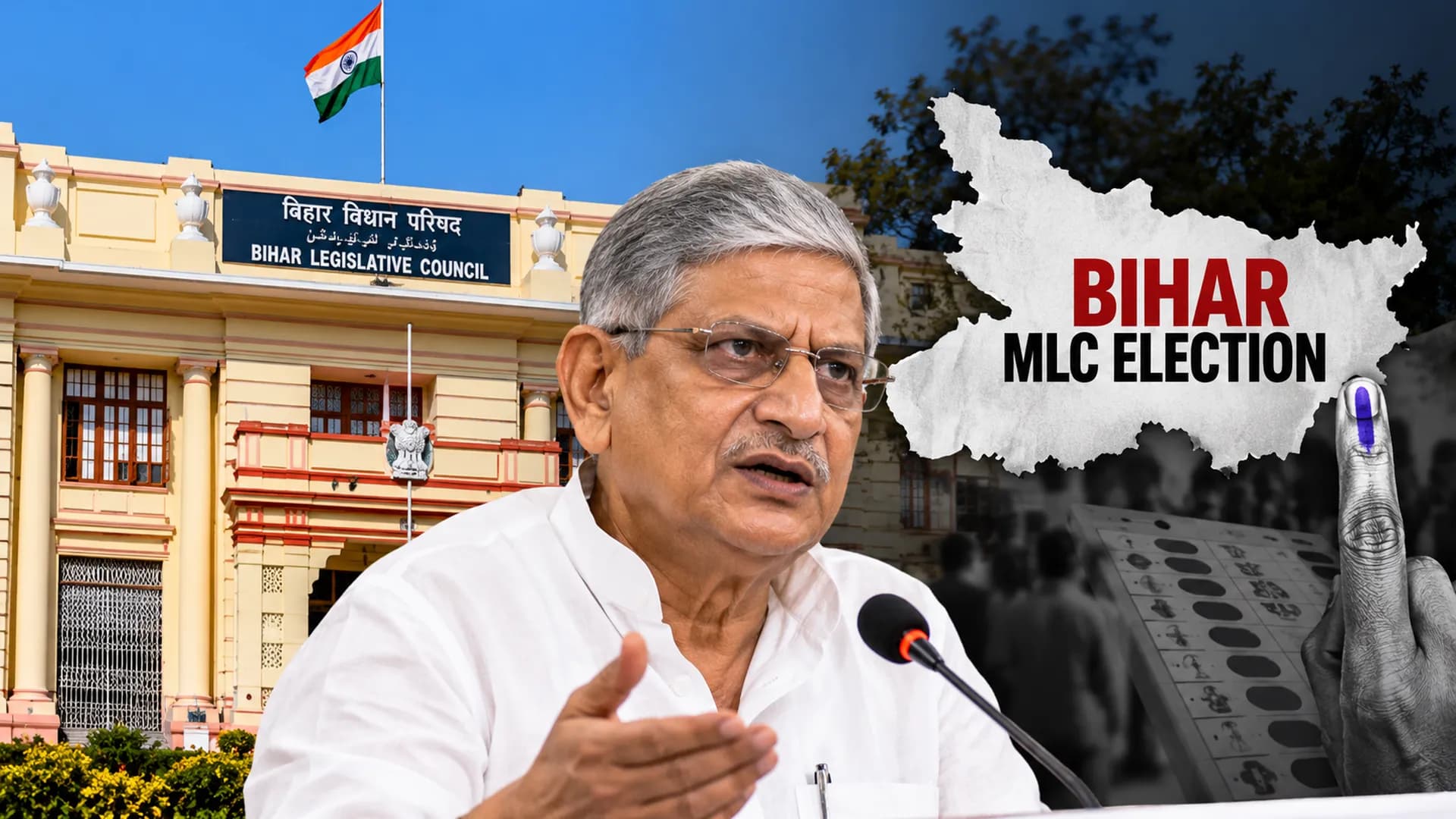
The campaign for Bihar's Legislative Council elections has brought attention to coordination within the ruling National Democratic Alliance (NDA), following a public disagreement involving JD(U) leaders and reports that three legislators from the Rashtriya Lok Morcha (RLM) were absent from an alliance meeting.
The developments have emerged ahead of polling for eight Legislative Council seats scheduled for 23 October 2026. Although the issues involve different political actors, they raise a common question: how effectively can a multi-party alliance coordinate its campaign when local disagreements and differences arise?
The reported events do not, by themselves, establish that the alliance is facing a wider organisational breakdown. They do, however, provide grounds for examining how its leaders are managing coordination before polling.
The JD(U) Disagreement
One of the most visible disputes concerns the Patna Graduates' constituency.
JD(U) has nominated Neeraj Kumar, while Mokama MLA Anant Singh has publicly backed Jan Suraaj candidate Anuj Singh. Singh's position has brought the disagreement between the leaders into the election campaign.
The situation presents a challenge for party coordination because the official candidate and the publicly supported rival do not have the same political backing.
Political parties generally seek to ensure that their elected representatives support official nominations. When a legislator publicly supports another candidate, the party may need to clarify its position and decide how to respond.
However, the disagreement should not be taken as proof that all JD(U) representatives or supporters share Singh's position. The extent of any division requires evidence beyond the statements of individual leaders.
Attempts to Resolve the Disagreement
Published reporting has described efforts by Bihar Chief Minister Samrat Choudhary to address the disagreement before the MLC election.
The reports said the effort did not produce a resolution. They also described a warning that action could be taken against people who opposed NDA candidates.
The exact scope of any proposed action and whether a formal decision followed should be checked against an official statement. A reported warning should not be described as a completed disciplinary action unless the relevant decision is confirmed.
Internal negotiations can be difficult when disagreements involve established local political relationships. Their effectiveness depends on whether the parties involved are willing to accept a common position and whether the leadership can communicate a clear decision.
RLM Legislators and the Alliance Meeting
Another development reported in connection with alliance coordination was the absence of three RLM MLAs from an NDA meeting at the Chief Minister's residence.
The absence attracted attention because it occurred during the same election period. However, the reason for the legislators' absence should not be assumed without a direct explanation or reliable reporting establishing their position.
Non-attendance at a meeting does not automatically mean that a legislator has withdrawn support from the alliance. There can be different reasons for an absence, and the political meaning depends on the surrounding facts.
The relevant questions include whether the legislators explained their absence, whether the party issued a statement and whether any subsequent meeting or public announcement clarified the issue.
These details are necessary to distinguish a scheduling or participation issue from a substantive political disagreement.
Why Coordination Matters in a Multi-Party Alliance
An alliance must coordinate its candidates, public messaging and campaign activity while accommodating the interests of its constituent parties.
This can become more complicated when candidates compete in different constituencies and local leaders have their own political relationships. A common alliance position does not eliminate all differences among individual members.
The Legislative Council election also differs from a general Assembly election because graduates' and teachers' constituencies have defined electorates. Campaigns must be tailored to those voters, and local organisation can be particularly important.
As a result, the strength of an alliance cannot be judged solely by the number of public meetings or the statements of senior leaders. It also depends on whether its candidates receive coordinated support at the constituency level.
What the Disputes Tell Us—and What They Do Not
The reported JD(U) disagreement and RLM meeting absences indicate that coordination questions have arisen during the MLC election campaign.
They do not establish that the NDA has lost support among voters or that its candidates are certain to perform poorly. Such conclusions would require election results or credible constituency-level evidence.
The same caution applies to predictions that internal disputes will automatically benefit opposition candidates. Voters may respond differently across constituencies, and the outcome will depend on multiple factors.
The responsible approach is to report the developments, seek explanations from the people involved and avoid turning political speculation into a factual conclusion.
What to Watch Before Polling
The next developments to monitor include any official response from JD(U) leadership, further statements by Anant Singh, clarification from the RLM legislators and evidence of coordinated campaigning by alliance candidates.
The parties' responses will help establish whether the disagreements remain localised or lead to formal organisational changes.
The polling scheduled for 23 October and counting on 27 October will provide the electoral outcome. Until then, claims about the ultimate effect of the disputes should remain clearly labelled as analysis or political opinion.
The developments underline the importance of internal coordination in a multi-party alliance. Whether the issues materially affect the election will become clearer only as the campaign progresses and the results are declared.
Related Keywords
Join the discussion