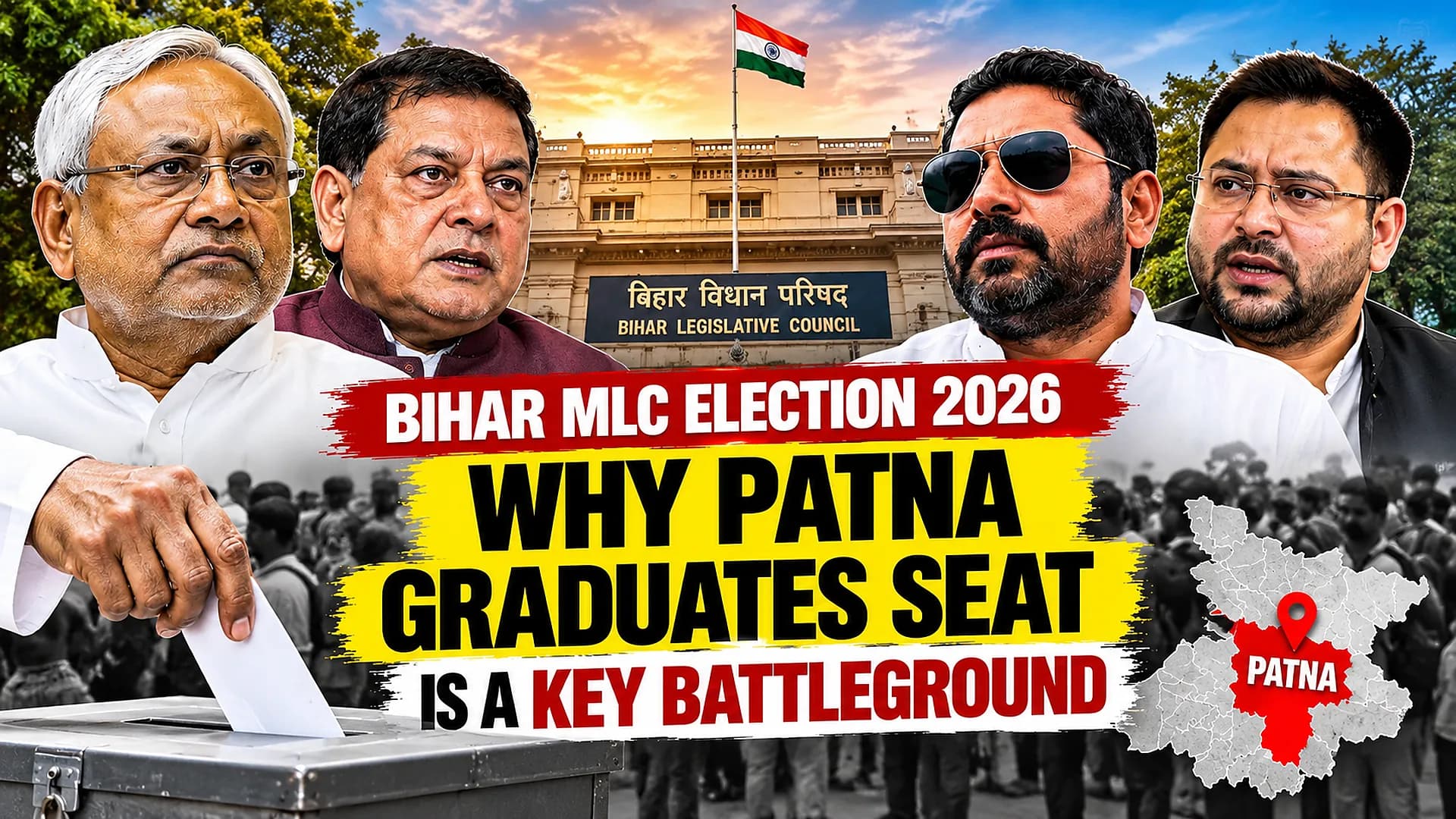
A New Political Trajectory in Bihar: Questions Over NDA Coordination
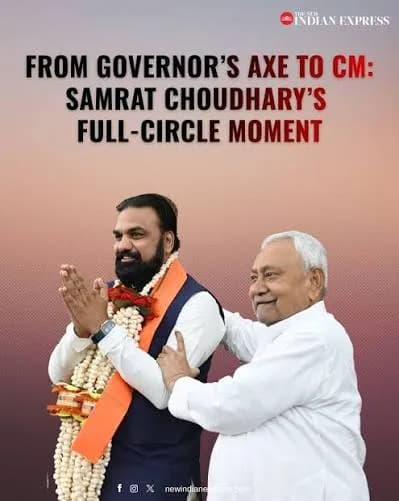
Bihar entered a new phase of its political journey in April 2026 after Bharatiya Janata Party (BJP) leader Samrat Choudhary became Chief Minister, succeeding Nitish Kumar. Choudhary took oath on April 15 and became the first BJP leader to hold the Chief Minister’s post in Bihar.
The change marked an important shift in the leadership structure of the National Democratic Alliance (NDA) in the State. Nitish Kumar, who had served as Chief Minister for more than two decades across multiple terms, resigned after being elected to the Rajya Sabha. Choudhary had previously served as Deputy Chief Minister in the Nitish Kumar-led government.
Samrat Choudhary Takes Charge
Samrat Choudhary was elected leader of the BJP Legislature Party before being chosen to lead the new NDA government. He was sworn in alongside JD(U) leaders Vijay Kumar Choudhary and Bijendra Prasad Yadav, who joined the government as Deputy Chief Ministers.
After taking oath, Choudhary said that Bihar would continue to follow what he described as the “Modi-Nitish model” of governance. His initial public statements therefore sought to underline continuity with policies associated with the previous government while establishing a new leadership structure.
Nitish Kumar’s New Role
Nitish Kumar's move from the Chief Minister's office to the Rajya Sabha represents a significant change in Bihar's political structure.
Kumar has remained an important figure within the JD(U) and the NDA. Following his resignation, he said the new government would receive his cooperation and guidance, while expressing confidence that development work in Bihar would continue.
The transition consequently combines a change in the Chief Minister's office with the continuation of the BJP-JD(U) alliance in the State.
BJP’s First Chief Minister in Bihar
Choudhary's elevation is historically significant for the BJP because he is the party's first Chief Minister of Bihar. The BJP had been a major component of Bihar's NDA politics for years, but the Chief Minister's position had previously been held by alliance partners, most notably Nitish Kumar.
The change gives the BJP direct leadership of the State government while the JD(U) continues to be an important NDA partner.
Questions Over the NDA’s Internal Dynamics
The change in leadership has also generated discussion about the future balance between the BJP and JD(U) in Bihar.
The article published on May 19, 2026, described concerns among sections of the JD(U) and political observers about whether the BJP's assumption of the Chief Minister's position would alter the traditional balance between the two parties.
Such assessments are political interpretations rather than evidence of a formal breakdown within the NDA. The two parties continued to participate in the same State government following Choudhary's appointment.
Choudhary Emphasises Continuity
Despite the change in leadership, Choudhary has repeatedly presented his government as continuing the development approach associated with Nitish Kumar.
His reference to the “Modi-Nitish model” after taking oath was an indication that the new BJP-led government intended to combine the BJP's leadership with continuity in governance policies.
This approach could also be important for maintaining coordination between the BJP and JD(U), particularly because the new government includes senior JD(U) leaders.
Political Debate Over the New Government
The leadership transition has also provided the Opposition with an opportunity to question the BJP's role in Bihar's political transformation.
During the Assembly trust vote in April, Opposition Leader Tejashwi Yadav questioned the circumstances surrounding the transfer of the Chief Minister's post from Nitish Kumar to the BJP. Choudhary rejected the Opposition's interpretation and defended the transition.
The debate illustrates how the change in leadership has become an important part of the wider political discussion in Bihar.
A Different Power Balance Within the NDA
For more than a decade, Nitish Kumar was the central political figure in Bihar's NDA government. The April 2026 transition changed that arrangement, with the BJP now holding the Chief Minister's position.
At the same time, the presence of senior JD(U) leaders in the government indicates that the alliance structure has continued rather than been replaced.
The political trajectory of Bihar will therefore depend not only on the Chief Minister's policies but also on how the BJP and JD(U) coordinate their roles within the government.
Governance and Development Remain the Focus
The new government has emphasised development, governance and continuity as its priorities. Prime Minister Narendra Modi, while congratulating Choudhary after his swearing-in, said his leadership and grassroots experience would contribute to Bihar's development.
For the State government, the immediate challenge is to translate the political transition into administrative continuity and implementation of its development agenda.
Bihar Politics Enters a New Phase
Samrat Choudhary's appointment represents a new chapter in Bihar politics, with the BJP holding the Chief Minister's post for the first time.
The JD(U) remains part of the ruling coalition, while Nitish Kumar continues his political role from the Rajya Sabha. The coming period will show how the two parties manage governance responsibilities and political coordination under the new leadership structure.
Expert View
Bihar's April 2026 leadership transition has changed the balance of political leadership within the NDA without ending the BJP-JD(U) coalition. The key issue going forward is how the BJP-led government and its alliance partners coordinate governance while maintaining continuity with policies associated with the previous administration.
Current Status
As of May 2026, Samrat Choudhary is the Chief Minister of Bihar and leads the State government, while Nitish Kumar has moved to the Rajya Sabha. The BJP and JD(U) remain part of the ruling NDA government, making their coordination an important factor in Bihar's political developments.
Related Keywords
Join the discussion