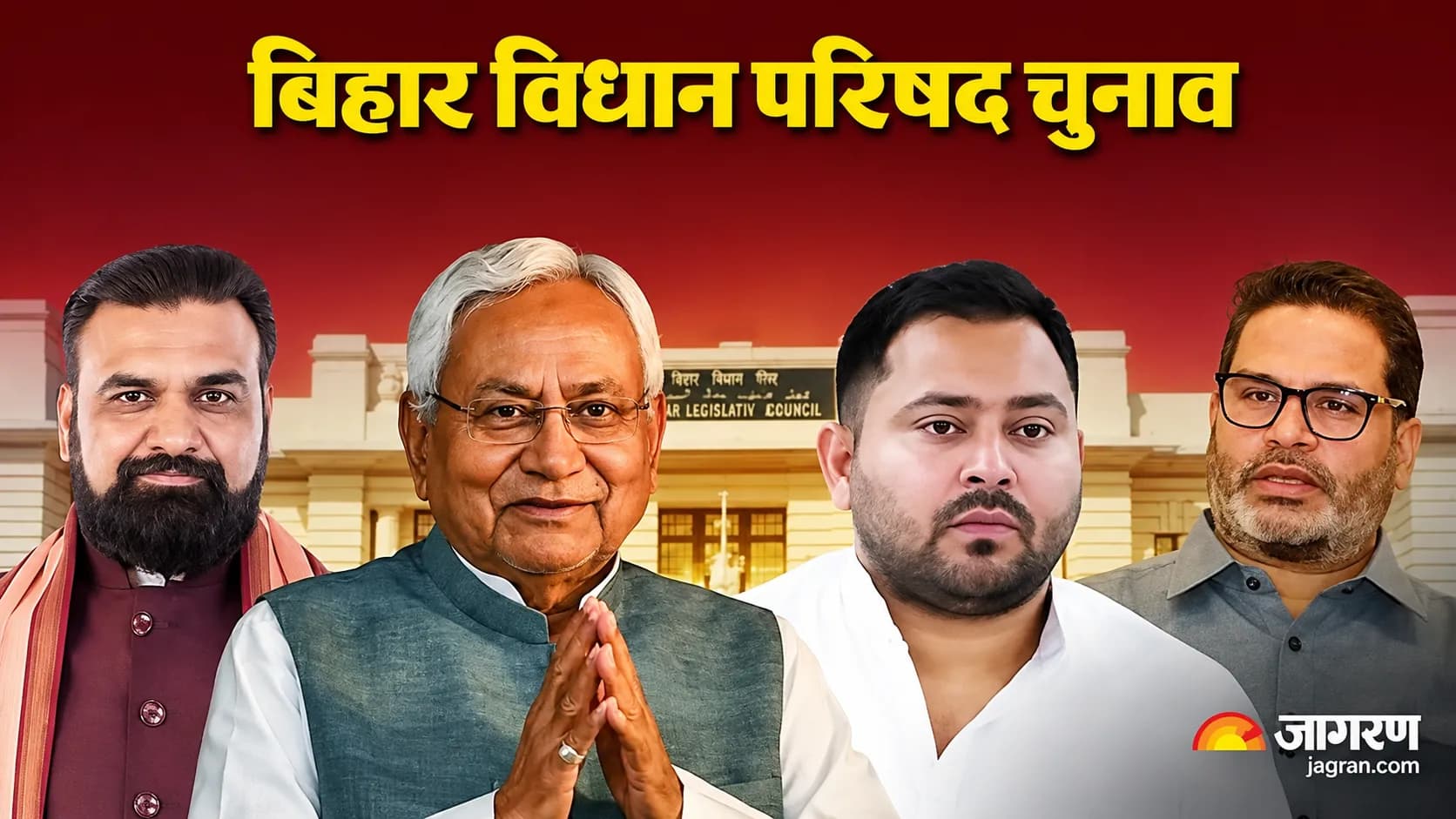
Bihar MLC Election: Anant Singh–Neeraj Kumar Dispute Exposes Tensions Within JD(U)
The upcoming Bihar Legislative Council elections have brought an internal political dispute within the Janata Dal (United), or JD(U), into the spotlight. Mokama MLA Anant Singh has expressed support for Jan Suraaj Party candidate Anuj Singh in the Patna Graduates' constituency, where JD(U) has fielded its own candidate, Neeraj Kumar.
The development has added an unusual dimension to the contest. Instead of facing opposition candidates alone, the official JD(U) nominee is also dealing with a challenge from a candidate backed by a sitting legislator from his own party.
The dispute matters because the Legislative Council elections are taking place across eight constituencies, covering four graduates' and four teachers' seats. The results will provide an indication of how effectively political parties can coordinate their local networks, manage internal disagreements and mobilise voters in these constituencies.
How the Dispute Developed
Anant Singh's support for Anuj Singh became publicly visible when he attended the Jan Suraaj candidate's nomination-related event in October. Reporting on the development said that Singh had openly opposed Neeraj Kumar and indicated that he intended to support Anuj Singh.
Singh's stated position was linked to his disagreements with Neeraj Kumar. His remarks presented the contest as more than a conventional competition between candidates representing different political parties.
The distinction is important: Singh's support for another candidate is a reported political development, while any broader conclusion about the extent of the disagreement or its effect on JD(U)'s electoral strength requires additional evidence.
Why the Patna Graduates' Seat Matters
The Patna Graduates' constituency is one of four graduates' constituencies involved in the election. The contest includes candidates representing different political organisations and interests.
Neeraj Kumar is the official JD(U) candidate, while Jan Suraaj has fielded Anuj Singh. The contest therefore gives voters a choice between candidates with different political affiliations, even as the public disagreement within JD(U) has attracted attention.
For a party seeking to maintain a coordinated campaign, such a situation can create organisational challenges. Local leaders, campaigners and supporters may need to balance their personal relationships with the party's official position.
However, the existence of a dispute does not establish that all JD(U) workers or voters are divided. The extent of any electoral impact will depend on campaign activity, voter preferences and turnout.
The Question of Party Discipline
Political parties generally expect elected representatives to support officially nominated candidates, particularly during elections in which the party has a direct stake.
When a sitting legislator publicly backs a rival candidate, party leadership may face questions about discipline and internal coordination. Such situations can also test how a party handles disagreements between leaders with different local support bases.
In this case, the reported disagreement has become part of the wider MLC election discussion. Reports have described attempts to resolve tensions between the leaders, although the precise status of any internal disciplinary action should be established through an official party statement before being reported as a confirmed decision.
It is also important to distinguish political criticism from formal disciplinary proceedings. A disagreement or public statement does not, by itself, prove that a party has suspended, expelled or formally penalised a member.
Jan Suraaj's Opportunity
For Jan Suraaj, the contest offers an opportunity to present itself as a competitor in a constituency where an established party has nominated a candidate.
Support from a sitting MLA may bring additional attention to a campaign. Nevertheless, public support from one politician does not establish how many voters will follow that politician's preference.
Jan Suraaj's electoral prospects will depend on its campaign organisation, the candidate's appeal, the issues raised during campaigning and the response of eligible voters.
The party's performance should therefore be assessed through verified election results rather than predictions or statements made by political leaders.
What to Watch Before Polling
The key developments to monitor are whether JD(U) announces any formal action, whether the leaders make further public statements, and how the candidates conduct their campaigns before polling.
The party's response may indicate how it intends to manage the disagreement. At the same time, the campaign should be assessed independently of the political controversy surrounding it.
The Bihar Legislative Council election will ultimately be decided by the eligible electorate. Until votes are counted, claims that the dispute has already determined the outcome would be premature.
For now, the Anant Singh–Neeraj Kumar disagreement illustrates the organisational challenges that can arise when local political rivalries intersect with official party nominations.
Related Keywords
Join the discussion