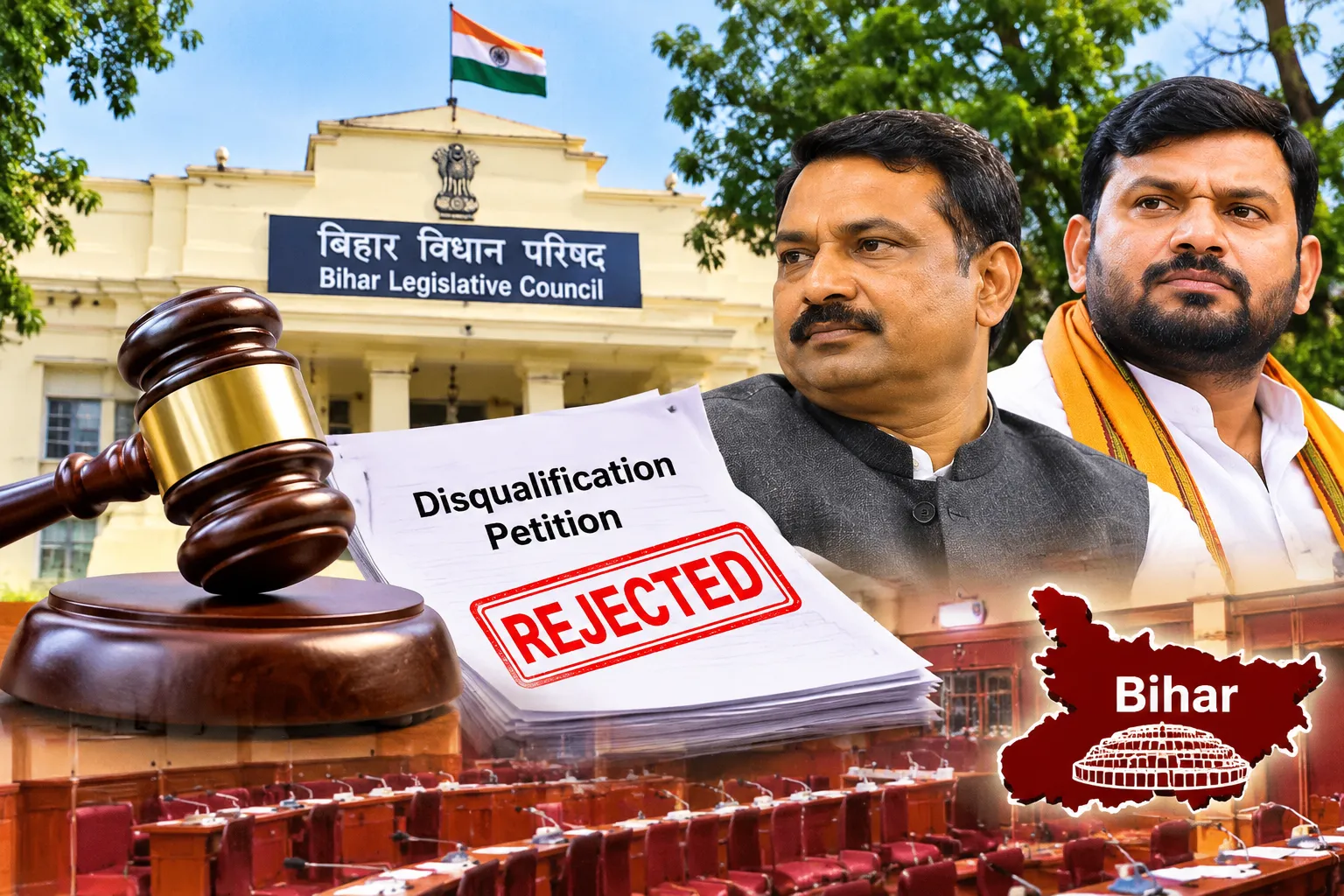
Bihar MLC Disqualification Battle Ends! Council Rejects Petitions Against Banshidhar Brajwasi and Rahul Raj
A Major Development in Bihar Legislative Politics
Bihar's political landscape witnessed another important development on November 18, 2026, after the Legislative Council secretariat dismissed petitions seeking the disqualification of two independent MLCs, Banshidhar Brajwasi and Rahul Raj.
The decision has brought a new turn to a controversy involving party membership, political support and the constitutional rules governing elected representatives.
The petitions were filed under the anti-defection framework after the two legislators were seen visiting the BJP office following their electoral victories.
The development had attracted attention from opposition parties and political observers across Bihar.
Why Were the Two MLCs Facing Disqualification Petitions?
Banshidhar Brajwasi and Rahul Raj had won the Tirhut Graduates' and Saran Teachers' constituencies respectively as independent candidates.
Following their victories, photographs showing them at the BJP office wearing saffron scarves and holding BJP membership receipts triggered political controversy.
Opposition leaders and Jan Suraaj representatives questioned whether their actions amounted to joining the BJP after contesting elections as independent candidates.
The controversy raised questions about the application of the anti-defection provisions of the Constitution.
The BJP and the two legislators, however, maintained that the representatives had extended support to the NDA government rather than formally joining the party.
Why Did the Council Reject the Petitions?
According to reports published on November 18, the Council secretariat rejected all the petitions on procedural and legal grounds.
Acting Chairperson Ramvachan Rai directed the rejection.
Deputy Secretary Manoj Kumar issued separate orders stating that the petitions were not maintainable under the applicable provisions.
The secretariat reportedly identified procedural defects, including issues concerning the authority of petitioners, affidavits and verification documents.
Importantly, the petitions were rejected at the preliminary stage. The allegations were not examined on their substantive merits.
Political Implications for the BJP
The decision provides immediate relief to the two MLCs and removes the threat arising from these particular petitions.
For the BJP, the development is politically significant because the controversy had created questions about its relationship with independent legislators.
The party had maintained that the two MLCs had extended support rather than formally joined it.
The rejection of the petitions gives the party an opportunity to move beyond the immediate controversy.
However, questions concerning political association and the interpretation of anti-defection rules may continue to attract attention.
Opposition Parties Face a New Political Challenge
For the RJD and Jan Suraaj, the decision represents a setback in their effort to pursue disqualification proceedings through the petitions that were filed.
The opposition can continue raising political questions about the circumstances surrounding the two legislators' electoral victories and subsequent public appearances.
However, political criticism and the legal requirements for disqualification are separate matters.
The distinction between political support, formal party membership and disqualification under constitutional provisions remains central to this controversy.
Why This Matters for Bihar Politics
The controversy highlights the importance of political identity and legislative independence in Bihar.
Independent candidates often play important roles in closely contested political environments.
Their subsequent political decisions can influence legislative calculations and create disputes involving party affiliation.
The case also demonstrates that disqualification proceedings must satisfy the constitutional and procedural requirements prescribed under the law.
What Happens Next?
The immediate legal development is the rejection of the petitions.
The broader political debate, however, may continue as opposition parties examine the implications of the decision and the ruling alliance maintains its position.
The episode could also influence future discussions about independent legislators and the application of anti-defection provisions.
Conclusion
The rejection of disqualification petitions against Banshidhar Brajwasi and Rahul Raj marks an important development in Bihar's Legislative Council politics.
The decision provides relief to the two MLCs while giving the BJP and NDA an opportunity to move beyond the immediate controversy.
However, the episode has once again brought political allegiance, independent representation and anti-defection rules into the spotlight.
Bihar's political battle may have entered a new phase, but the debate over legislative independence is far from insignificant.