Beyond Political Speeches: What PM Modi's Bihar Visit Means for Ordinary People
Introduction: Bihar's Development Story Faces an Important Test
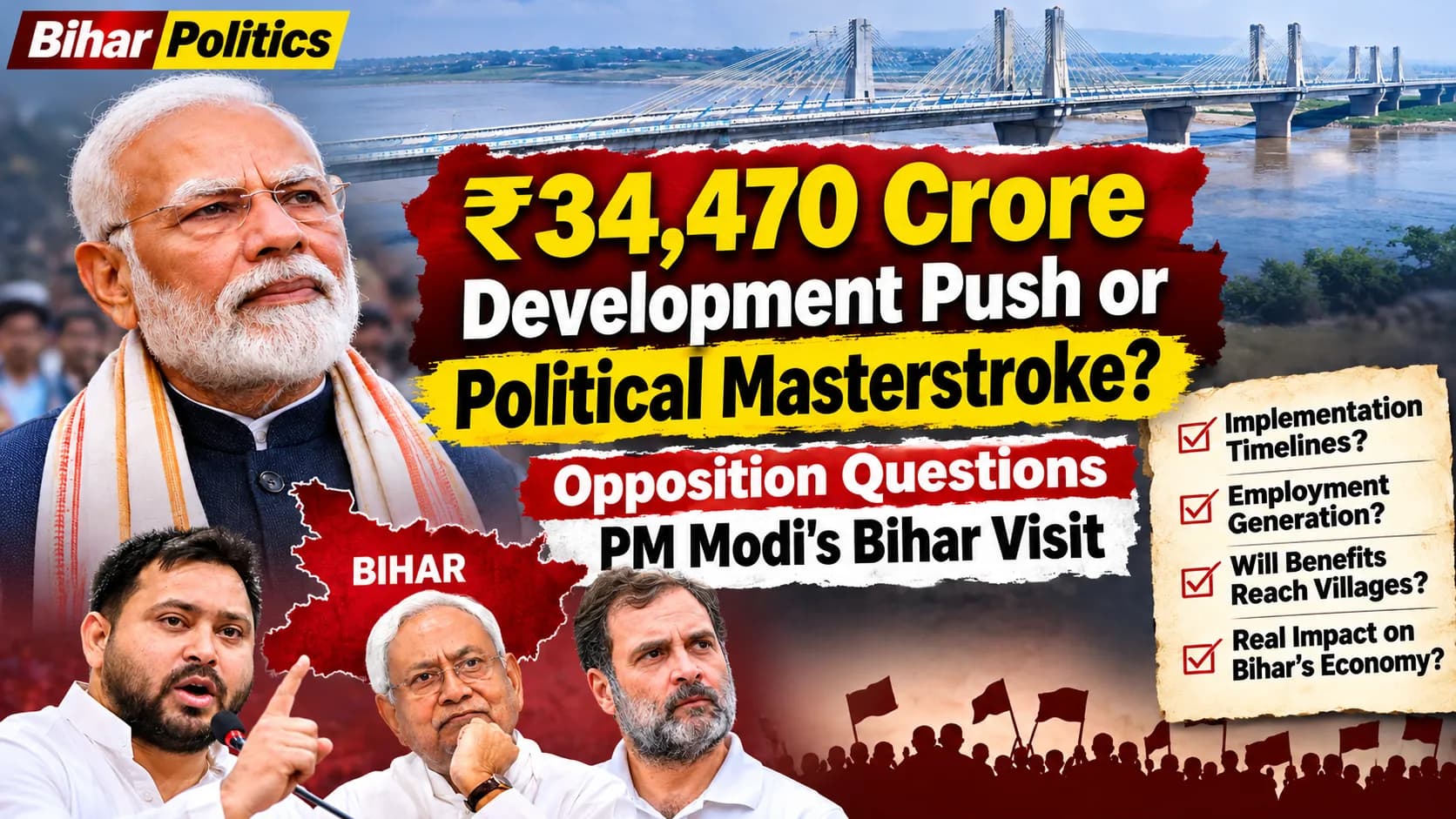
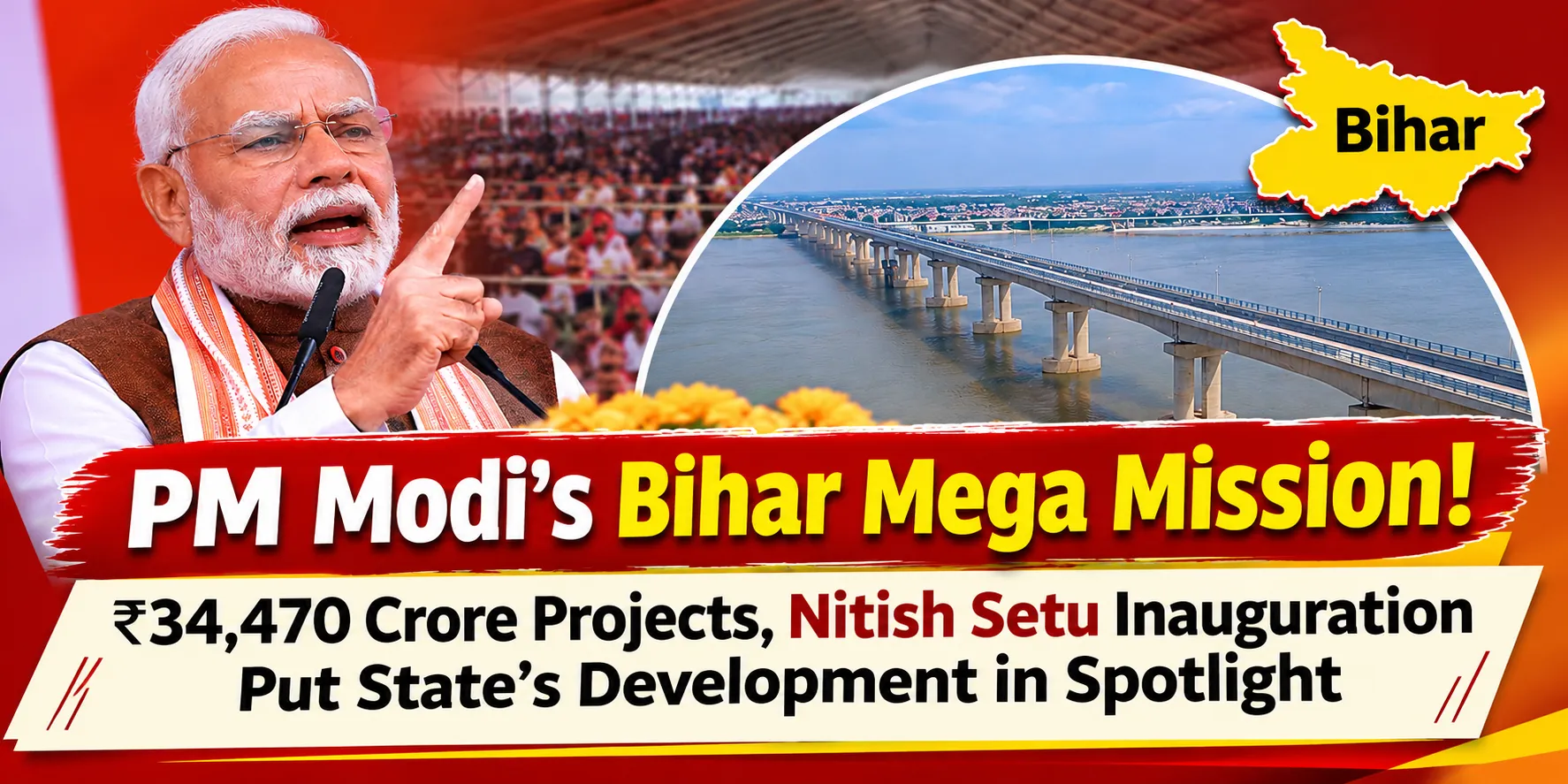
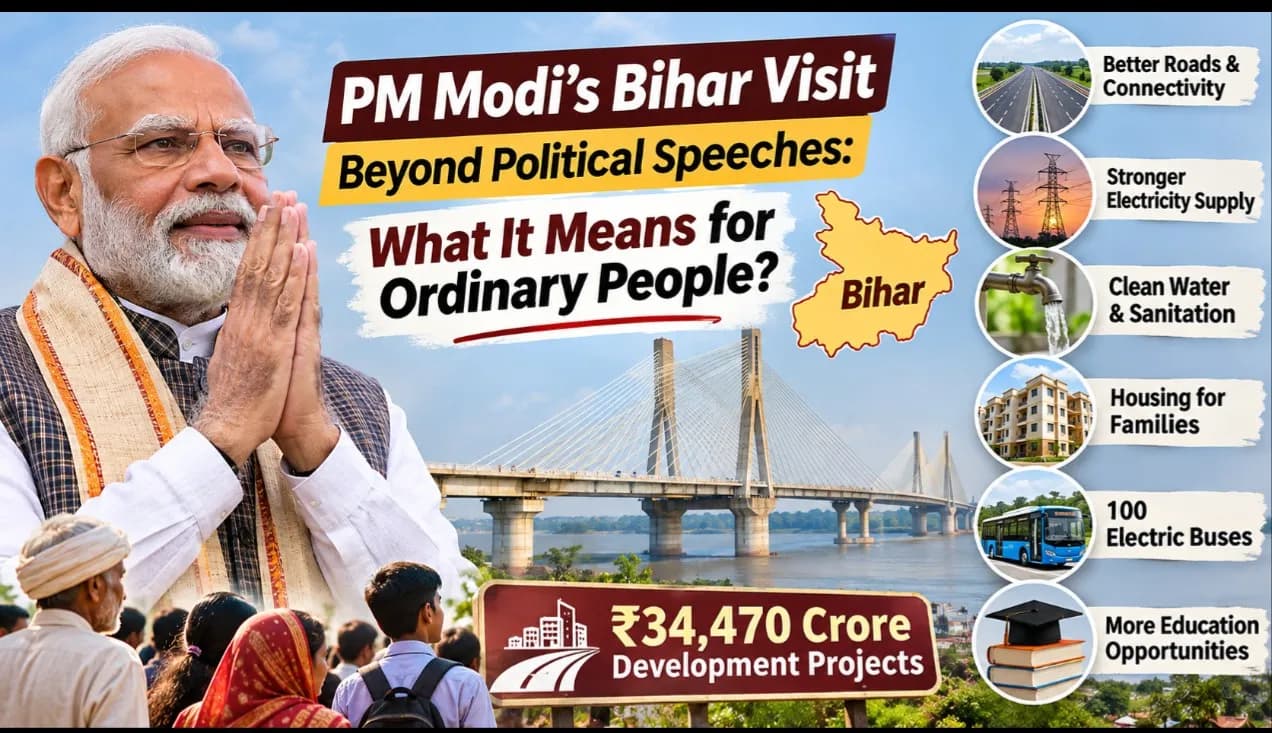
A major political and development event is unfolding in Bihar on November 21, 2026, as Prime Minister Narendra Modi visits Vaishali to inaugurate and dedicate infrastructure projects and lay the foundation stones for new initiatives worth approximately ₹34,470 crore.
The visit has attracted attention because of the range of sectors covered by the announced projects.
Roads, bridges, electricity, drinking water, sanitation, education, healthcare, housing and public transportation all feature in the programme.
But beyond the political significance of the Prime Minister's visit, an important question deserves attention:
How will these projects change the everyday lives of people in Bihar?
For a commuter travelling between Patna and North Bihar, the importance of a new bridge may be measured in reduced travel time.
For a farmer, better roads may mean easier access to agricultural markets.
For a student, improved educational infrastructure may create opportunities for technical education and research.
For an urban family, reliable water supply, sanitation and housing may matter more than the size of a political announcement.
Nitish Setu: Will Travel Become Easier Between North and South Bihar?
One of the biggest highlights of the programme is Nitish Setu, the six-lane bridge over the River Ganga.
The 19.7-kilometre project connects Kachhi Dargah in Patna district with Bidupur in Vaishali district.
Built at an estimated cost of ₹4,280 crore, the project includes a 9.7-kilometre main bridge and 10 kilometres of approach roads.
For ordinary commuters, the bridge could represent a major improvement in regional transportation.
Traffic congestion on existing Ganga crossings has long been an important concern for people travelling between different parts of Bihar.
An additional crossing is expected to reduce pressure on Mahatma Gandhi Setu and JP Setu.
The benefits could extend to:
Daily commuters travelling for employment.
Students attending educational institutions.
Patients travelling to hospitals in Patna.
Farmers transporting agricultural produce.
Traders and businesses moving goods between districts.
Raghopur Diara is also expected to benefit through improved access to Patna and essential services.
Farmers and Traders: Can Better Roads Improve Local Economies?
Infrastructure development has a direct relationship with economic activity.
In agricultural regions, transportation plays an important role in determining how quickly farmers can move their produce to markets.
Poor connectivity can increase transportation costs, delay deliveries and reduce access to buyers.
The road projects announced during the visit could help address some of these challenges.
The six-laning of the Aurangabad–Chordaha section of NH-19 and development of other national highway sections are intended to strengthen Bihar's road network.
The proposed four-laning of the Sahebganj–Areraj–Bettiah section of NH-139W is another important initiative.
Better connectivity could support trade, transportation and movement between regional economic centres.
Nevertheless, roads alone cannot guarantee higher agricultural incomes.
Farmers also need storage facilities, irrigation, access to markets, fair prices and effective agricultural support systems.
Electricity: An Essential Requirement for Economic Growth
Electricity is another important issue for households and businesses.
The inauguration of Unit 2 of the Buxar Thermal Power Project, with a capacity of 660 MW, is an important part of the programme.
The government is also scheduled to inaugurate distribution and transmission infrastructure projects.
Meanwhile, the foundation stone will be laid for the power evacuation project associated with the Pirpainti Super Thermal Power Project.
For ordinary citizens, electricity development matters because reliable power affects education, healthcare, small businesses, agriculture and household activities.
Small businesses require dependable electricity to operate equipment and maintain services.
Students need reliable power for studying and accessing digital educational resources.
Hospitals and healthcare facilities also depend on stable electricity supplies.
However, power generation and electricity distribution are different aspects of the energy system.
Urban Families: Will Water and Sanitation Improve?
Urban infrastructure is another area receiving attention.
Sewerage and water-supply projects are scheduled for several towns, including Purnea, Begusarai, Hajipur, Motihari, Samastipur, Saharsa, Bodhgaya and Biharsharif.
For residents, these initiatives could be particularly important.
Clean drinking water and proper sanitation are fundamental public services.
As towns grow, pressure on existing water-supply systems and drainage infrastructure increases.
Poor sewerage facilities can create environmental and public-health problems.
Therefore, investments in these sectors could help improve urban living conditions.
But residents will ultimately judge the projects through their everyday experiences.
Will drinking water be available regularly?
Will drainage systems function during heavy rainfall?
Will sewerage facilities be maintained properly?
Housing: What the PMAY Announcement Means for Families
The visit also includes a Griha Pravesh ceremony for more than 26,900 beneficiaries under Pradhan Mantri Awas Yojana–Urban.
For families receiving housing assistance, a permanent home can provide greater security and stability.
However, housing development should not be measured only by the number of houses constructed.
A house must also be supported by basic facilities, including drinking water, electricity, sanitation, road connectivity and access to public services.
Public Transport: Are Electric Buses a Step Towards Better Mobility?
The Prime Minister is scheduled to flag off 100 PM-eBuses in Bihar.
Electric buses are increasingly becoming part of discussions surrounding modern public transportation.
For commuters, the main questions are practical.
Will buses operate on convenient routes?
Will services be affordable?
Will they run regularly?
Will charging and maintenance infrastructure be sufficient?
Education: Can New Institutions Create More Opportunities?
The development programme includes initiatives related to IIT Patna's Research Park and hostel, engineering and polytechnic institutions, residential schools and other educational infrastructure.
Education remains a significant concern for Bihar's young population.
Students frequently seek opportunities for higher education, technical training and employment.
Investment in educational infrastructure could help strengthen the state's institutional capabilities.
But new buildings alone cannot guarantee better educational outcomes.
Qualified faculty, research opportunities, practical training, scholarships and employment connections are equally important.
The Political Dimension: Development or Political Messaging?
A Prime Ministerial visit involving projects worth approximately ₹34,470 crore naturally carries political importance.
Political parties are likely to interpret the programme through their respective positions on governance and development.
The government can highlight infrastructure investment, public welfare and the expansion of connectivity.
Opposition parties may focus on implementation, project delays, employment generation, public accountability and whether ordinary citizens are receiving the expected benefits.
The Biggest Challenge: Turning Announcements into Results
The announcement of infrastructure projects is an important first step, but implementation remains the most significant challenge.
Some projects are scheduled for inauguration, while others are receiving foundation stones.
These are two different stages of development.
An inaugurated project has reached a stage where it can be dedicated to the public, whereas a foundation-stone project requires further execution.
Citizens should therefore distinguish between completed infrastructure and projects that are still planned or under development.
Important factors requiring attention include:
Timely completion of construction.
Transparent utilisation of public funds.
Quality control and safety standards.
Proper maintenance after inauguration.
Accessibility for rural and economically weaker communities.
Employment opportunities connected with infrastructure investment.
Effective coordination between central and state authorities.
What Should Bihar's Citizens Expect Next?
The coming months and years will be important for evaluating the impact of the announced initiatives.
Citizens will expect better transportation, improved public services, reliable electricity and stronger educational opportunities.
Businesses will look for better connectivity and infrastructure that can support investment.
Farmers will expect transportation improvements to help their access to markets.
Urban residents will look for improvements in water supply and sanitation.
Conclusion: Bihar Needs Results That People Can Experience
Prime Minister Narendra Modi's visit to Bihar on November 21, 2026, places an extensive infrastructure programme in the public spotlight.
Nitish Setu, electricity projects, road connectivity, housing, urban water supply, educational facilities and electric buses represent different aspects of Bihar's development priorities.
The potential benefits are significant, but their actual impact will depend on effective implementation.
For ordinary people, the most important question is not how many projects are announced during a political visit.
Ultimately, Bihar's development should be measured through improvements in the daily lives of its citizens.
The real success of a development programme begins when its benefits reach beyond the inauguration stage and become part of everyday life.