Bihar PHED Fines Nine Contractors ₹13.74 Lakh Over Nal-Jal Scheme Lapses
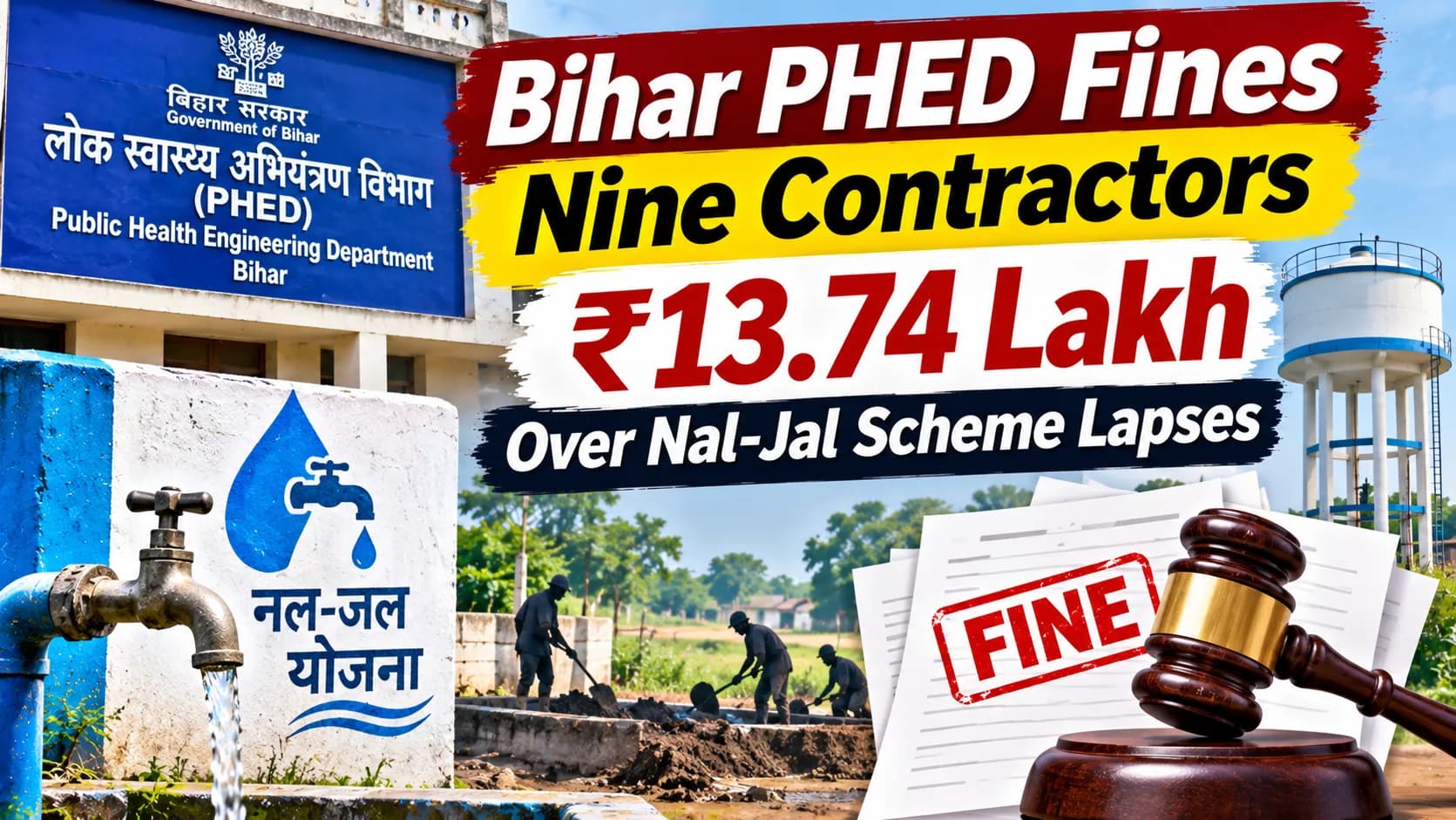
The Bihar Public Health Engineering Department has imposed a combined penalty of ₹13.74 lakh on nine contractors over alleged lapses in work connected with the state's Nal-Jal scheme.
The action was taken following a departmental review of complaints and delays in resolving public grievances. The department has also set a 24-hour deadline for addressing complaints, signalling a renewed administrative focus on accountability in the delivery of drinking water services.
The development has political significance because the Nal-Jal scheme has been associated with the state's public service delivery agenda under successive governments. The latest action puts the performance of contractors and the monitoring responsibilities of the department under public scrutiny.
Why were nine contractors penalised?
According to the available report, the department found lapses involving work under the Nal-Jal scheme and delays in dealing with complaints.
A total penalty of ₹13.74 lakh has been imposed on nine contractors.
The available information does not identify all nine contractors or specify the individual penalty imposed on each. Therefore, the action should be reported as a combined departmental penalty rather than attributing specific amounts or violations to individual contractors.
The department's action followed a review meeting in which officials examined the status of complaints and the performance of contractors.
What is the Nal-Jal scheme?
The Nal-Jal initiative is connected with the provision of household drinking water through tap connections.
In Bihar, the scheme has been an important part of the state's public service delivery agenda. Its implementation involves multiple levels of administration, contractors and local monitoring arrangements.
For households, the effectiveness of the programme depends not only on the installation of tap connections but also on the regular availability and quality of water.
Complaints about incomplete work, interruptions or maintenance failures therefore require timely attention.
Department sets a 24-hour grievance deadline
Alongside the penalties, the department has directed that complaints should be resolved within 24 hours.
The deadline is intended to improve the response to public grievances and reduce delays in dealing with water-supply-related problems.
However, the effectiveness of such a direction will depend on how complaints are recorded, assigned to responsible officials and verified after action is taken.
A deadline is only one part of grievance redressal. Citizens also need a clear way to register complaints and receive information about their resolution.
Political importance for the Samrat Choudhary government
The action comes under the administration of Chief Minister Samrat Choudhary.
For the government, contractor penalties and faster grievance-resolution directions provide an opportunity to demonstrate administrative monitoring of public services.
At the same time, the development raises questions about how long the reported lapses continued, what monitoring mechanisms were in place and whether similar problems exist in other areas.
The government and department will need to demonstrate that action is followed by sustained improvements rather than remaining a one-time enforcement measure.
Questions about accountability and implementation
The latest action brings several questions into focus:
Were the complaints recorded through a formal monitoring system?
What specific contractual conditions were violated?
How were the nine contractors selected for penalties?
Were the penalties recovered or are further proceedings pending?
How will the department verify compliance with the 24-hour deadline?
What mechanism will allow residents to escalate unresolved complaints?
The available report does not provide answers to every question. These details should be obtained from departmental records before making further claims.
What should residents expect next?
Residents will be watching whether the department's new deadline leads to faster complaint resolution and more reliable water supply.
The administration should publish clear information about the complaints addressed, penalties recovered and follow-up inspections conducted.
Political accountability in public service delivery requires measurable outcomes. Penalising contractors can be one enforcement step, but the larger test is whether citizens receive the services for which public funds have been allocated.
The ₹13.74-lakh penalty is an immediate administrative action. Its wider significance will depend on whether the government can convert enforcement into consistent improvements in drinking water services across Bihar.
Related Keywords
All tagsJoin the discussion