Tejashwi Yadav Questions Samrat Choudhary’s Vision: Bihar’s Governance Debate Intensifies
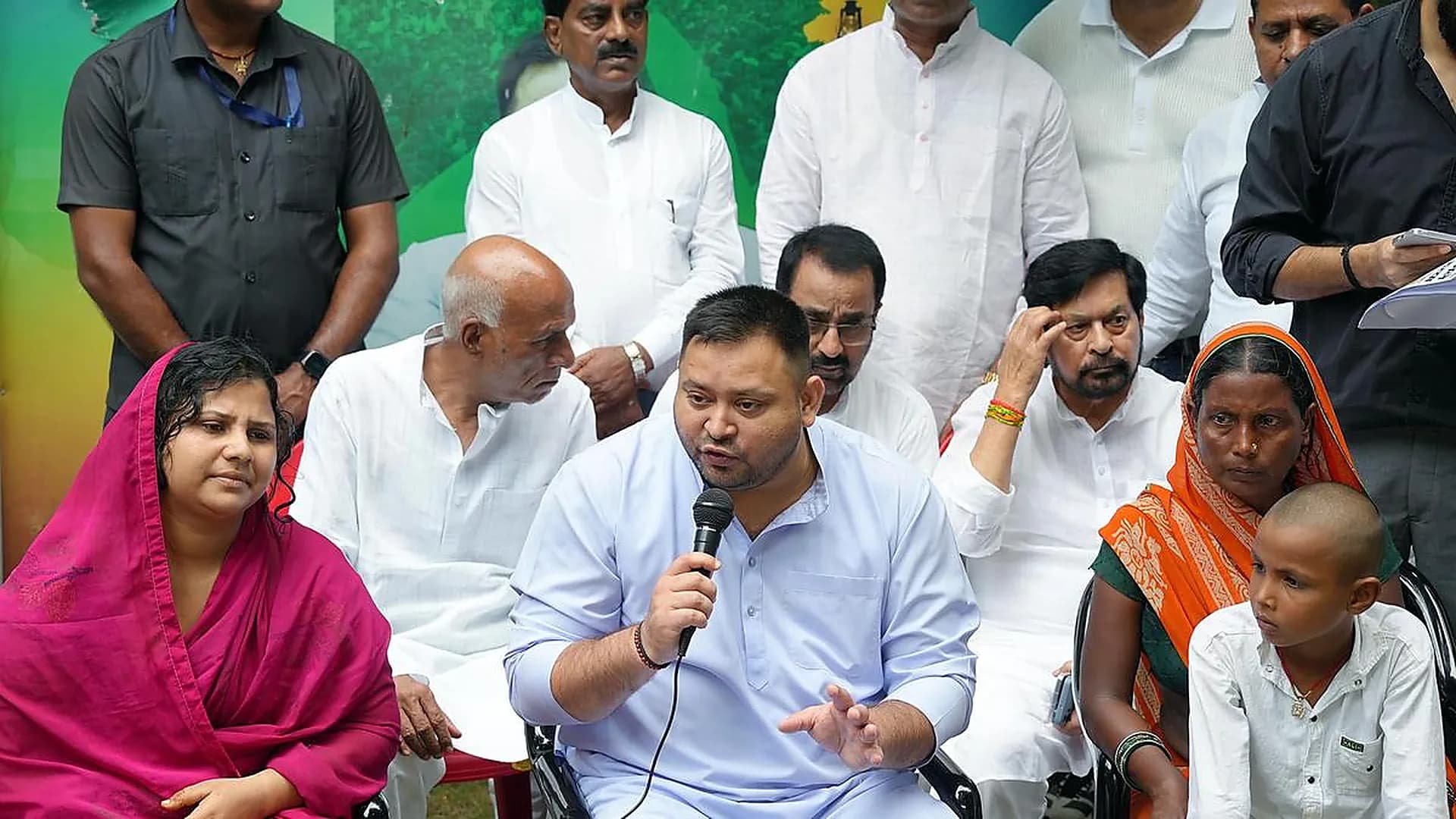
Rashtriya Janata Dal (RJD) leader Tejashwi Yadav criticised Bihar Chief Minister Samrat Choudhary on October 15, questioning the government’s direction and raising concerns about law and order, unemployment and corruption.
The remarks added to the political exchange between Bihar’s ruling NDA and the opposition. Yadav’s criticism focused on whether the state government had a clear development agenda and whether it was addressing public concerns about safety and employment.
These statements represent the opposition leader’s assessment of the government. The allegations should be examined separately from verified information about crime, employment and the administration of public services.
What Did Tejashwi Yadav Say?
According to reporting published on October 15, Yadav described Choudhary as lacking a clear vision for Bihar and criticised the government’s handling of governance issues.
He referred to reported criminal incidents while arguing that law and order required greater attention. The comments formed part of the RJD’s wider effort to scrutinise the government’s performance.
The exact context of the remarks is important. Political statements often combine criticism of specific incidents with broader claims about government performance, and those claims require separate assessment.
An allegation that the government has failed to maintain law and order does not, by itself, establish the overall state of crime. Such an assessment requires crime statistics, details of investigations and information about the response of law-enforcement agencies.
Law and Order as a Political Issue
Public safety is a recurring issue in Bihar politics. Opposition parties can use serious incidents to question the government’s performance, while the administration is responsible for explaining its response and the steps taken to prevent further offences.
A balanced assessment should consider the nature of the incident, the action taken by police, the progress of investigations and any relevant court proceedings.
It is also important to distinguish an allegation from a proven offence. Arrests, investigations and charges are separate from convictions, and reporting should preserve those distinctions.
For the government, transparent information about investigations and law-enforcement action can help the public understand how authorities are responding to concerns.
Employment and Development
Yadav’s criticism also addressed unemployment and the broader development agenda.
Employment is a significant policy question because it affects young people entering the workforce, families seeking stable incomes and workers considering opportunities outside Bihar.
The government’s development initiatives should be evaluated through measurable information, including employment creation, investment implementation, recruitment and the operation of new industrial facilities.
Similarly, opposition criticism is more useful when it identifies specific policy gaps and proposes alternatives that can be assessed.
The political debate becomes clearer when both sides distinguish between promises, ongoing programmes and completed outcomes.
The Government’s Position
The BJP has presented the NDA government’s agenda in terms of governance, infrastructure, economic development and welfare programmes. Its broader message is that the state should move towards greater prosperity.
That position can be examined through the implementation of individual policies rather than through party statements alone.
Relevant evidence includes government expenditure, project timelines, published employment data, public-service performance and official records of administrative action.
The available reports do not establish that the government has accepted Yadav’s criticism. Any response from Choudhary, the BJP or other NDA leaders should be included if a direct statement is available.
Why the Exchange Matters
Political criticism and government responses form part of democratic accountability. Opposition leaders can raise concerns and demand explanations, while the government can defend its record and provide evidence of its work.
For example, a claim about unemployment should be assessed through appropriate labour-market information. A claim about law and order should be considered alongside police data, investigation records and other relevant evidence.
This approach allows readers to examine competing positions without treating rhetoric as proof.
What Should Be Watched Next?
The next developments to monitor include any direct response from the chief minister or the BJP, further statements from the RJD and new government information concerning employment and public safety.
If the opposition provides specific evidence for its allegations, those details should be examined alongside official records and any relevant responses.
For the government, the challenge is to demonstrate progress through transparent implementation. For the opposition, the challenge is to connect criticism with verifiable evidence and clear policy alternatives.
The exchange illustrates how governance and development remain central to Bihar’s political debate. Its wider significance will depend on the evidence that emerges and the actions taken by both the government and its critics.
Related Keywords
Join the discussion