Bihar Voter Roll Revision Under Scrutiny as 65 Lakh Names Removed in Electoral Exercise
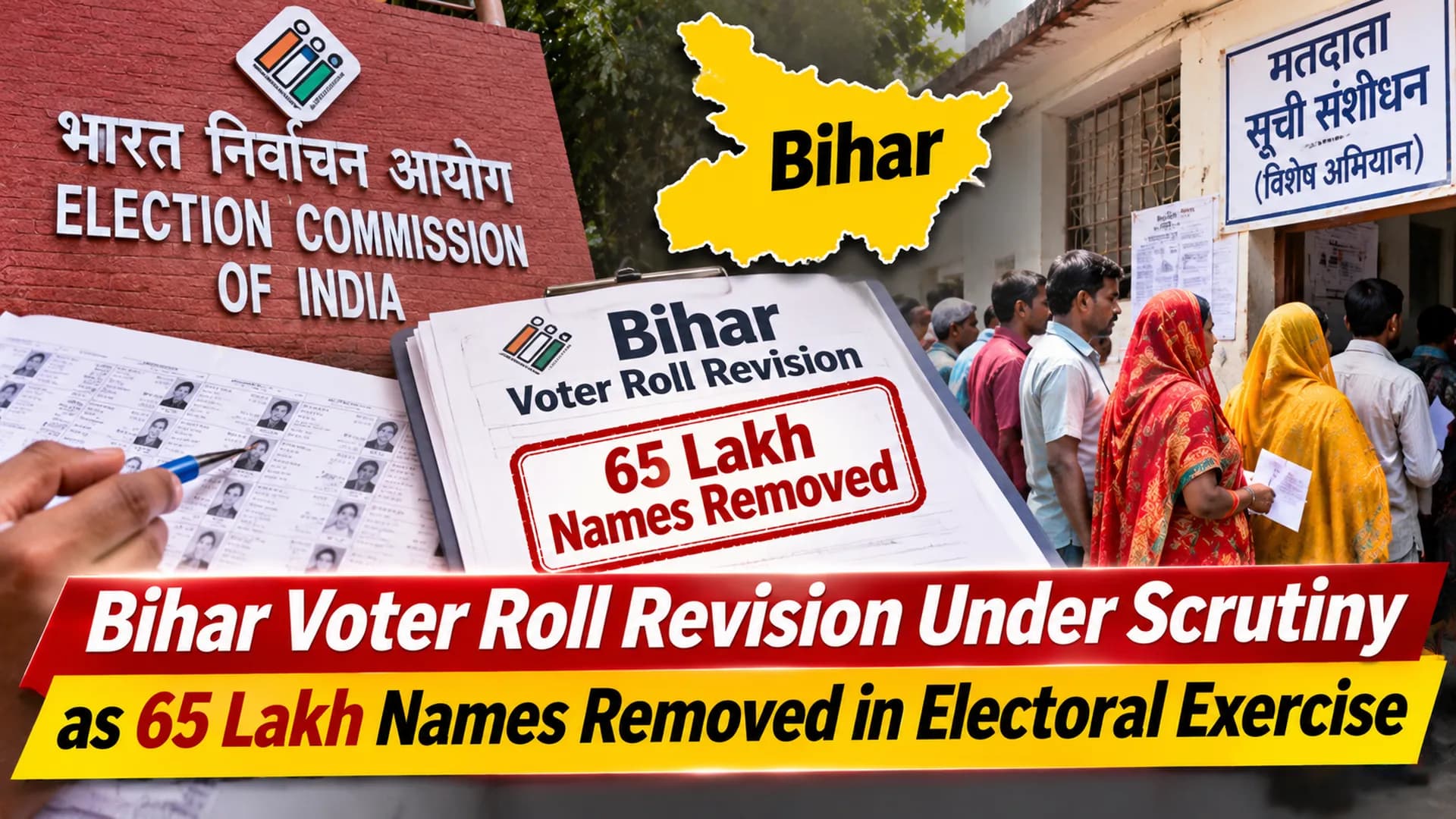
Bihar Voter Roll Revision Under Scrutiny as 65 Lakh Names Removed in Electoral Exercise
Bihar's electoral roll revision has once again become a major political and administrative issue after approximately 65 lakh names were removed during the Special Intensive Revision (SIR). The exercise, which began in Bihar before expanding to other parts of the country, has raised questions about voter verification, the accuracy of electoral records and the safeguards available to citizens whose names are missing.
The debate has gained fresh attention following national scrutiny of the Election Commission's voter verification process on November 16. The issue is particularly important for Bihar because the state was among the first places where the intensive exercise was implemented.
Why the Revision Is Under Discussion
Electoral roll revision is intended to maintain accurate voter records by identifying eligible electors, updating personal details and removing entries that are no longer valid under the rules. However, large-scale deletions can create concern if eligible citizens are mistakenly excluded.
The reported removal of approximately 65 lakh names from Bihar's electoral records has therefore become a major point of discussion. The figure does not automatically mean that every removed entry belonged to an eligible voter. At the same time, the scale of the change makes it important to ensure that genuine voters have access to correction and appeal procedures.
Opposition Raises Questions About Exclusions
Opposition parties have questioned the process, arguing that eligible citizens may face difficulties proving their eligibility or restoring their names. Concerns have also been raised about the time available for verification and the documentation required from voters.
The Election Commission and the BJP have rejected allegations that the exercise is politically biased. The dispute reflects a wider disagreement over whether the verification system is sufficiently accessible and whether the safeguards are strong enough to prevent wrongful exclusion.
Political allegations should not be treated as established findings. The central question is whether the procedures are being applied consistently and whether affected citizens can obtain timely remedies.
Election Commission's Verification Process
The Election Commission's process involves checking voter details and providing mechanisms through which citizens can raise claims and objections. The latest Special Summary Revision is intended to update the electoral records following the earlier intensive exercise.
The draft rolls published in November allow citizens to check their names and submit claims or objections within the notified period. The Election Commission has also announced further verification measures, including home visits in certain areas.
For Bihar voters, checking the current electoral record is essential. A person whose name is missing should use the official process to seek inclusion or correction rather than assuming that an earlier voter identification document automatically guarantees an entry in the latest roll.
Political Consequences for Bihar
The voter roll issue has implications for all major political parties in Bihar. The BJP and NDA will face questions about the transparency of the process, while RJD, Congress and other opposition parties are likely to continue raising concerns about possible exclusions.
For parties with extensive rural and booth-level networks, voter registration is also an organisational priority. They can help citizens understand the official process, but such assistance should not become an excuse for collecting documents without proper safeguards.
The debate may influence public confidence in election administration, particularly among communities that face difficulties accessing records or completing verification procedures.
What Voters Should Do
Citizens should check their names in the latest official electoral roll and verify that their personal details are correct. Anyone who finds an error or missing entry should follow the Election Commission's prescribed claims and objections procedure and retain relevant acknowledgement details.
Political parties, civil society organisations and election officials also have a responsibility to ensure that eligible voters understand the process. Verification should improve the accuracy of the list without creating unnecessary barriers for citizens.
Why Transparency Matters
Bihar's experience is important because the state became an early testing ground for the intensive voter verification exercise. The reported deletions have made transparency, accessibility and accountability central to the national debate.
The success of electoral revision should not be measured only by the number of names removed or added. It should also be judged by whether every eligible voter has a fair opportunity to remain on the list and challenge an incorrect deletion.
As of November 16, the issue remains under public and political scrutiny. The final assessment will depend on the correction process, the handling of appeals and the ability of eligible citizens to exercise their voting rights without avoidable obstacles.
Related Keywords
All tagsJoin the discussion