JD(U) Announces Major Organisational Reshuffle as Samrat Choudhary Calls Cabinet Meeting
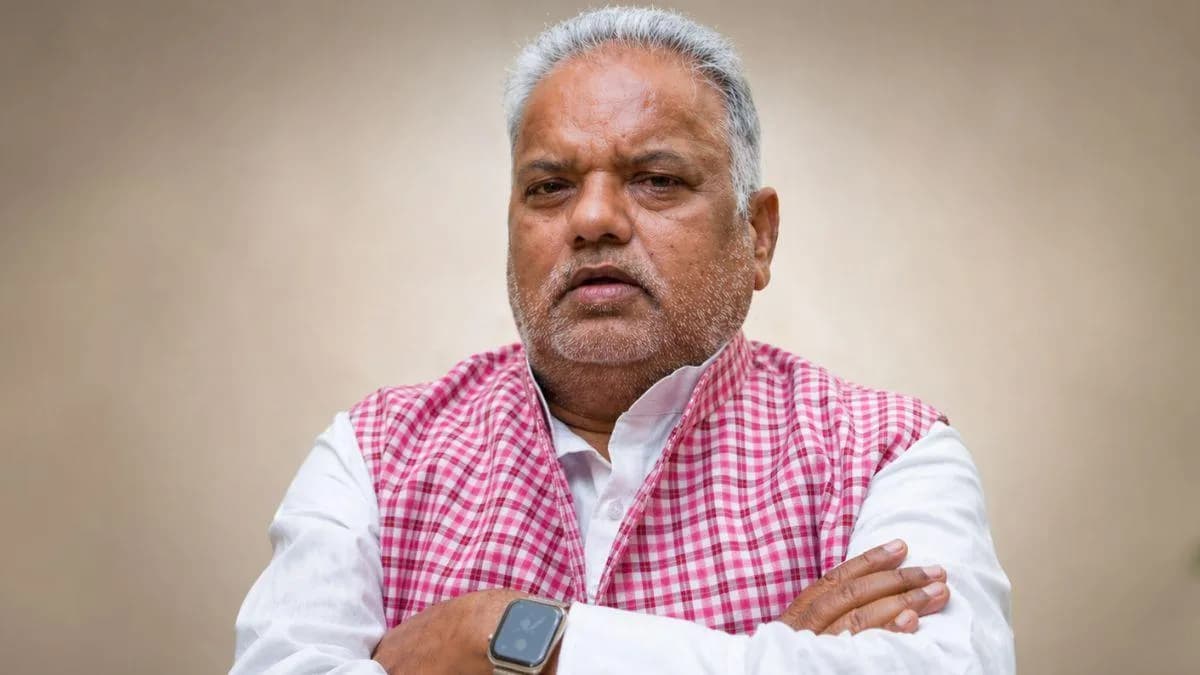
JD(U) Announces Major Organisational Restructuring
The Janata Dal (United), led by Nitish Kumar, has announced a significant organisational reshuffle, appointing new state in-charges and co-in-charges and changing responsibilities among several national office-bearers.
The changes are aimed at strengthening the party's organisational structure across different states and improving coordination among its state units.
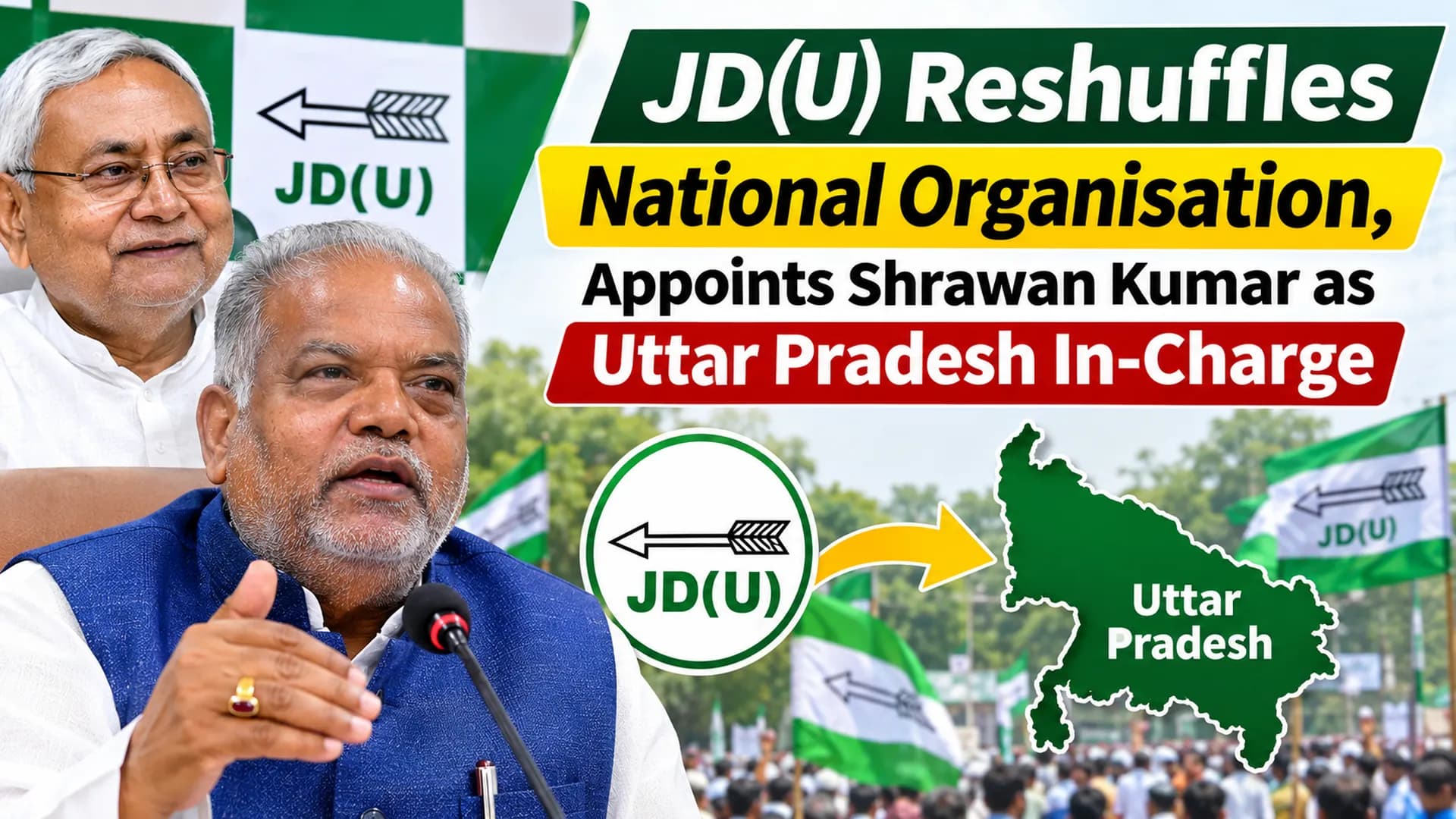
Among the major appointments, Bihar minister Shravan Kumar has been given responsibility as the party's Uttar Pradesh in-charge. Former MLA Ramesh Kushwaha has been appointed as the Uttar Pradesh co-in-charge.
New Responsibilities for Senior JD(U) Leaders
As part of the restructuring, several senior leaders have been assigned responsibilities in different states.
The major appointments include:
Shravan Kumar: Uttar Pradesh in-charge
Ramesh Kushwaha: Uttar Pradesh co-in-charge
Shyam Rajak: Maharashtra in-charge
Ramsewak Singh: Jharkhand in-charge
Raj Singh Mann: Haryana in-charge
Manish Kumar Verma: Odisha in-charge
Harsh Vardhan Singh: Goa in-charge
Anil Hegde: North-Eastern states co-in-charge
National Vice-President and former MP Chandeshwar Prasad Chandravanshi has been assigned responsibility for the party's Extremely Backward Classes (EBC) cell.
National General Secretary Afaque Ahmad Khan has been given responsibility for the party headquarters, North-Eastern states and Jammu and Kashmir.
Changes in National Secretaries and State Units
The JD(U) has also revised responsibilities among its national secretaries.
Ravindra Prasad Singh has been assigned Chhattisgarh, Vidyasagar Nishad Madhya Pradesh, Dayanand Rai western Uttar Pradesh, Sanjay Kumar Karnataka, Mohammad Nisar the party headquarters and Tamil Nadu, Shailendra Kumar Punjab, Ruhi Tagung Assam and Dharmendra Tiwari West Bengal.
Shailendra Kumar has been relieved of his responsibility as Delhi state president and assigned the role of national secretary in charge of Punjab. Kamlesh Raj has been appointed working president of the Delhi unit.
These appointments form part of a wider effort to reorganise the party's national and state-level leadership responsibilities.
Samrat Choudhary Cabinet Meeting Scheduled for November 18
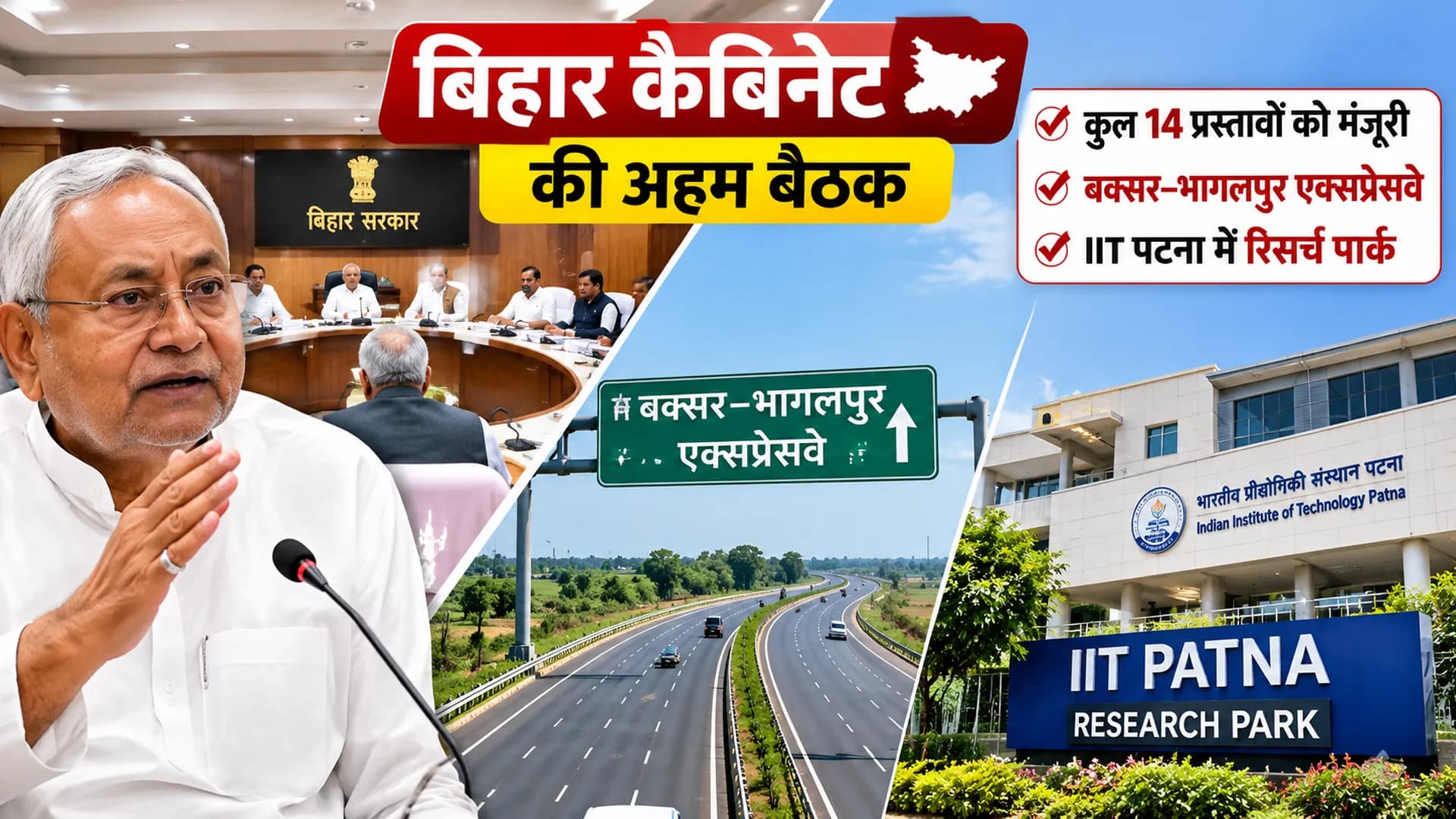
Meanwhile, Bihar Chief Minister Samrat Choudhary's cabinet meeting was scheduled to take place on November 18.
Several important proposals relating to state administration and development were expected to be considered during the meeting.
The meeting comes as the new Bihar government continues its administrative and policy-related work under Samrat Choudhary's leadership.
The decisions taken at the meeting are expected to provide further clarity on the government's priorities and upcoming initiatives.
Tejashwi Yadav Demands Disqualification of Two Independent MLCs
Another major political development reported on November 18 involved RJD leader and Leader of Opposition Tejashwi Yadav.
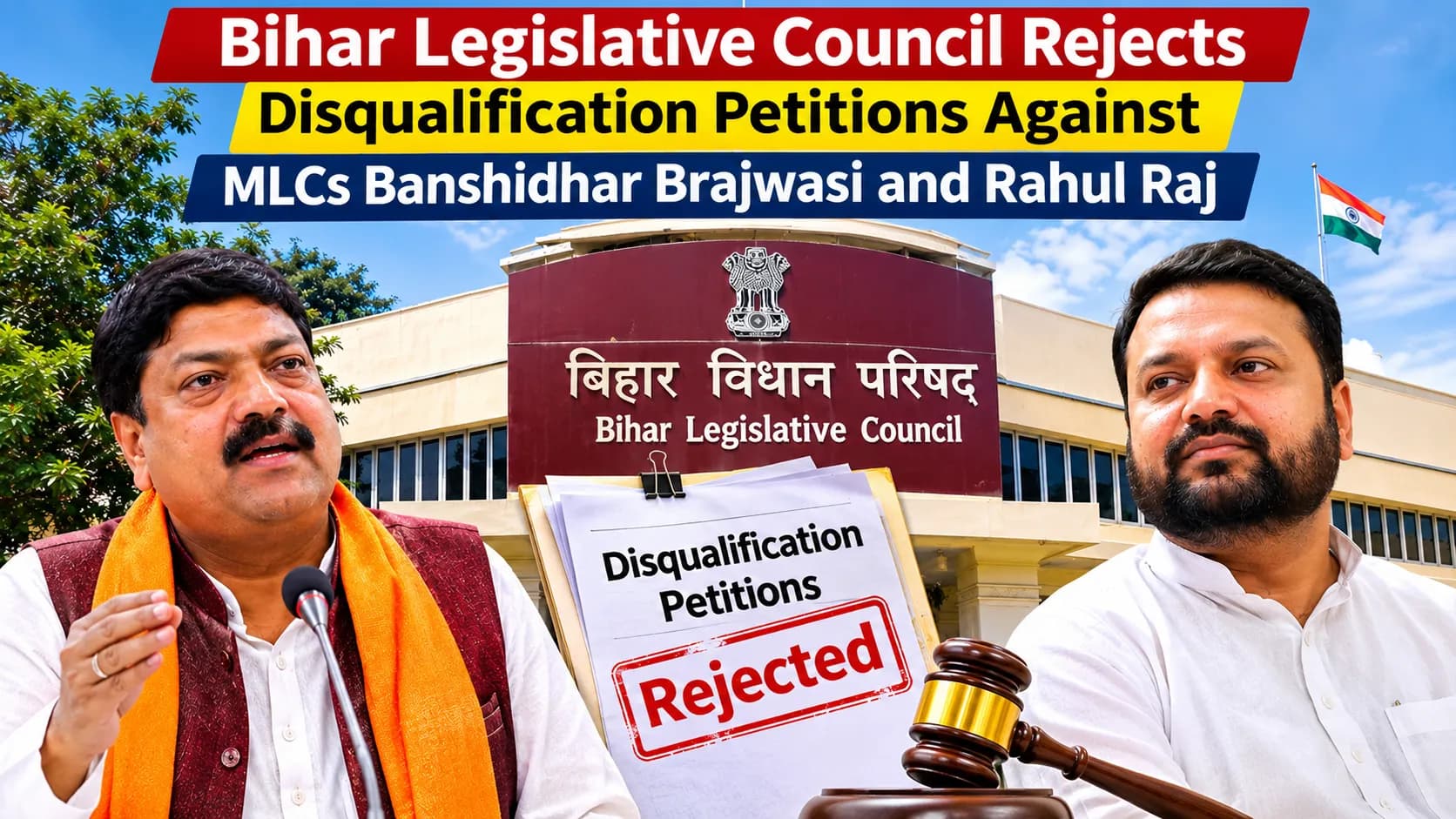
Tejashwi met Bihar Legislative Council Deputy Chairman Ram Bachan Rai and submitted a memorandum demanding the disqualification of independent MLCs Bansidhar Brajwasi and Rahul Raj.
According to Tejashwi, both leaders had contested and won their seats as Independent candidates before joining the BJP.
He argued that their subsequent entry into the BJP raised questions under the anti-defection provisions of the Tenth Schedule of the Constitution.
The RJD leader demanded that their Legislative Council memberships be cancelled. The matter adds another political and constitutional dimension to the ongoing confrontation between the RJD and BJP in Bihar.
Bihar Politics Enters a New Phase
The JD(U)'s organisational reshuffle, the scheduled cabinet meeting and the RJD's challenge over the two MLCs highlight several important political developments in Bihar.
While JD(U) is reorganising its leadership responsibilities across states, the Samrat Choudhary government is preparing to advance its administrative agenda.
At the same time, the opposition RJD continues to raise questions about political defections and the conduct of the ruling BJP.
These developments underline the continuing political activity in Bihar as the state's ruling alliance and opposition parties focus on organisational strength, governance and legislative issues.