RJD's Anil Kumar Jha Defeats BJP in Darbhanga MLC Election After 60-Hour Counting Battle

The Rashtriya Janata Dal (RJD) has registered an important victory in the Bihar Legislative Council elections after its candidate Anil Kumar Jha defeated BJP nominee Sarvesh Kumar in the Darbhanga Graduates' constituency. The result was officially declared on October 29 following nearly 60 hours of preference-based vote counting.
Anil Kumar Jha secured 25,406 votes, defeating sitting MLC and BJP candidate Sarvesh Kumar, who received 21,396 votes. The victory margin was 4,010 votes, according to the reported final results.
The outcome attracted considerable political attention because Sarvesh Kumar had maintained an early advantage during the first-preference counting rounds. However, the subsequent transfer of preference votes changed the direction of the contest.
Second-Preference Votes Change the Election Outcome
The Darbhanga Graduates' constituency witnessed an extended counting process under the Single Transferable Vote (STV) system.
During the initial rounds, BJP candidate Sarvesh Kumar remained ahead of his RJD rival. However, neither candidate secured the required quota through first-preference votes.
As the counting progressed, candidates were eliminated and their ballots transferred according to voters' subsequent preferences. These transfers helped Anil Kumar Jha overcome the BJP candidate's initial advantage.
After the final counting rounds, Jha emerged victorious, bringing the seat back into the RJD's column.
Tejashwi Yadav's RJD Gains Another Legislative Council Seat
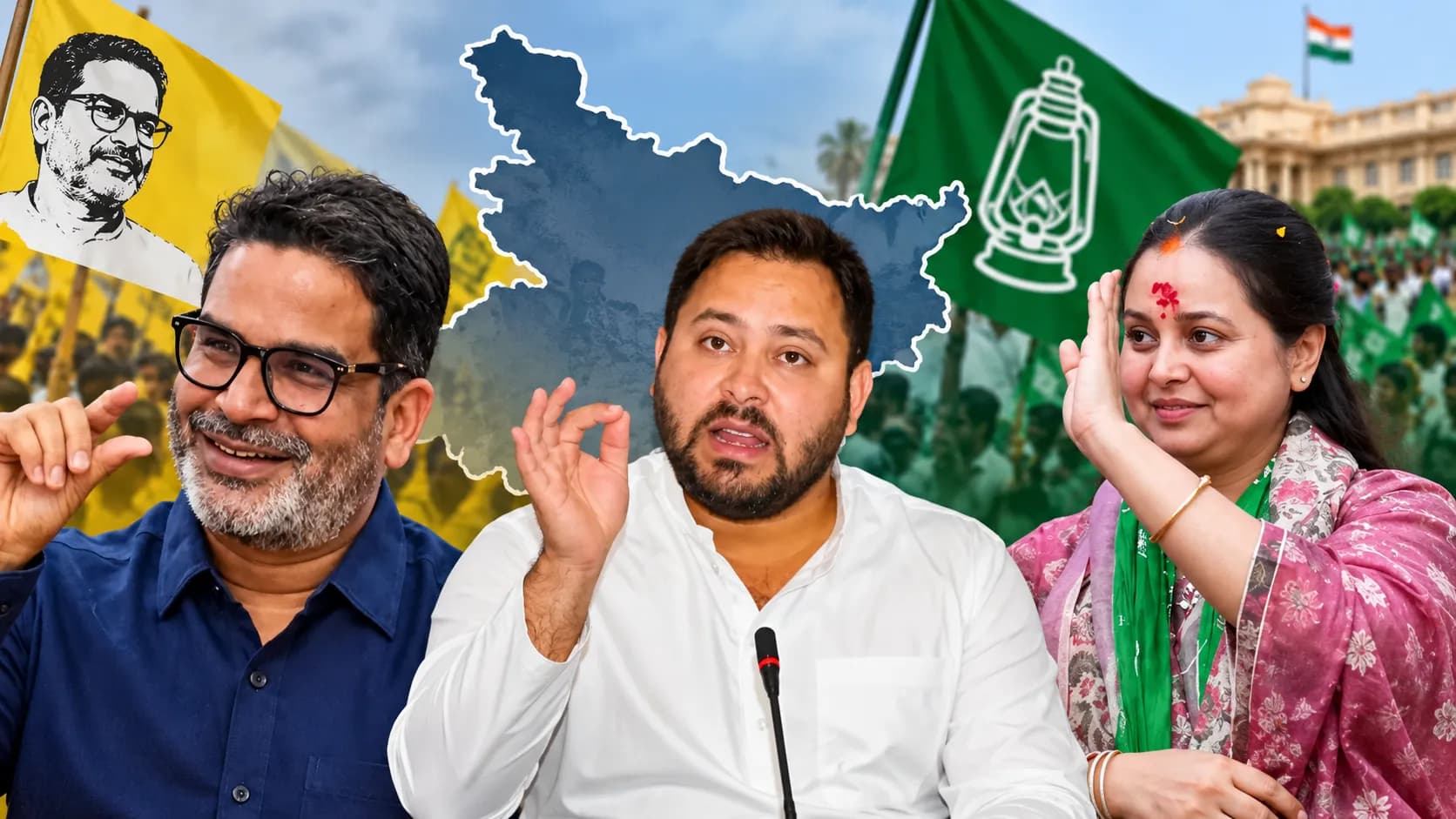
The victory provides a boost to the RJD under the leadership of Tejashwi Yadav. The party has now secured two seats in the eight-seat Bihar Legislative Council election.
The result also adds to the party's representation in the state's Upper House at a time when political parties are assessing their organisational strength and support among different voter groups.
RJD leaders described the victory as a significant achievement, particularly because their candidate had faced an incumbent BJP-backed legislator who initially appeared to be leading the contest.
BJP and NDA Face a Mixed Outcome
The Darbhanga result has added another dimension to the NDA's performance in the Bihar MLC elections.
The BJP secured victories in the Kosi Graduates' and Tirhut Teachers' constituencies, while JD(U) retained the Patna Graduates' seat. However, the BJP lost the Patna Teachers' constituency to the RJD and Darbhanga Graduates' seat to Anil Kumar Jha.
Jan Suraaj Party also made its entry into the Bihar Legislative Council after Suresh Prasad Rai defeated former Bihar Congress president Madan Mohan Jha in the Darbhanga Teachers' constituency.
Independent candidates also secured two seats, reflecting the multi-cornered nature of the contests.
Eight MLC Seats Produce a Mixed Verdict
The Bihar Legislative Council elections covered four Graduates' constituencies and four Teachers' constituencies. Voting took place on October 23, while counting continued over several days.
The final distribution of the eight seats was:
BJP: 2 seats
JD(U): 1 seat
RJD: 2 seats
Jan Suraaj Party: 1 seat
Independents: 2 seats
The results showed that different political formations maintained support across the state's graduates' and teachers' constituencies.
What the Darbhanga Result Means for Bihar Politics
Anil Kumar Jha's victory is an important development for the RJD, particularly because it came after the BJP candidate had maintained an advantage during the initial counting rounds.
For the BJP, the result means losing a constituency that its candidate had initially appeared positioned to retain. Meanwhile, the entry of Jan Suraaj into the Legislative Council adds another political player to Bihar's legislative landscape.
The results are likely to feature prominently in discussions within the BJP, JD(U), RJD and other parties as they review their organisational performance and electoral strategies.
The Darbhanga contest has also highlighted the importance of preference-based voting in Legislative Council elections, where second and subsequent preferences can determine the final outcome.