Maithili Thakur Land Dispute: Why the Controversy Has Become a Test of Political Accountability
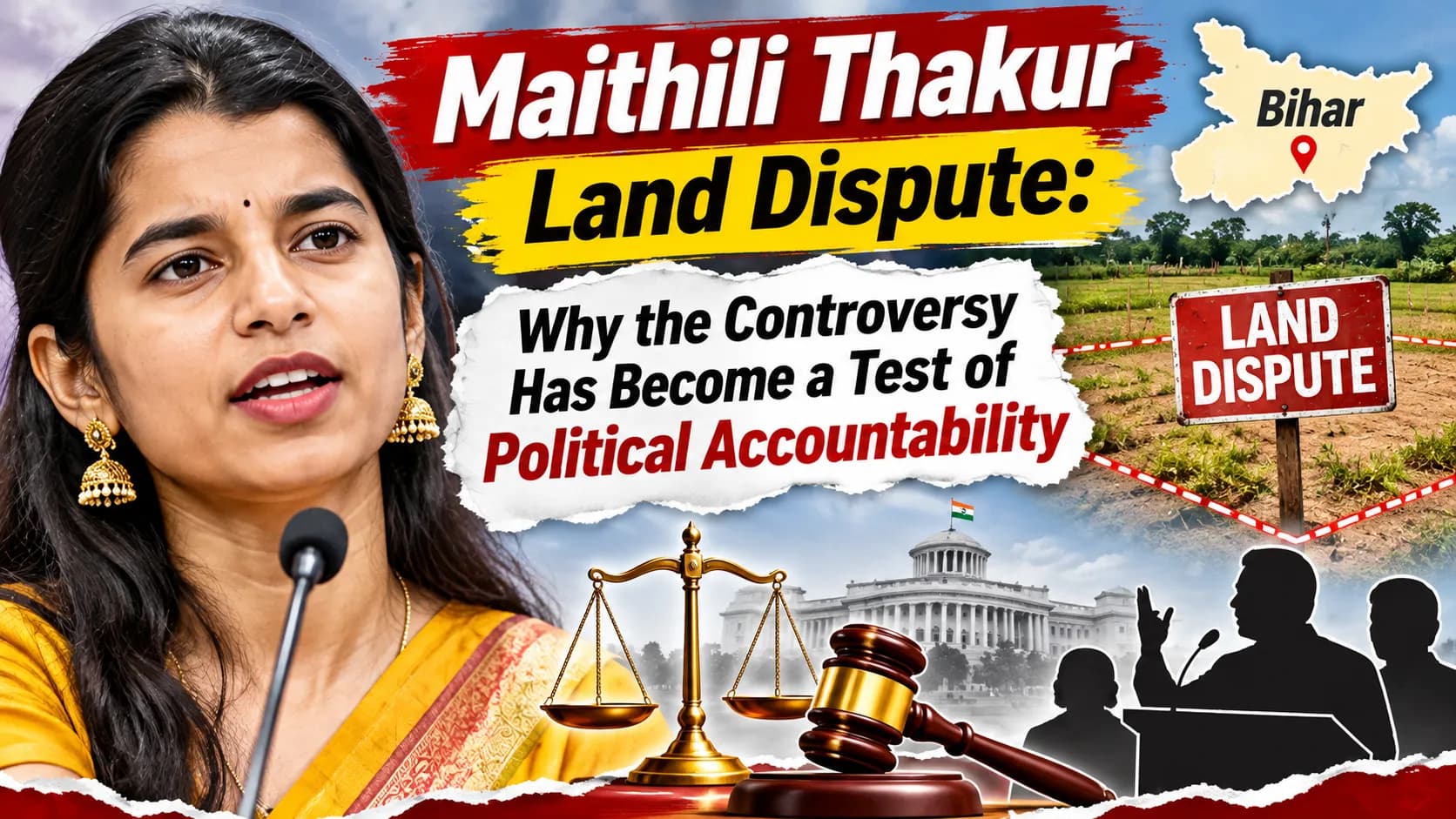
A land dispute involving the family of Bharatiya Janata Party MLA Maithili Thakur has developed into a significant political and administrative issue in Bihar. The controversy centres on allegations raised by residents of Pokharbhinda village in Darbhanga district against her father, Ramesh Thakur.
The matter has attracted public attention because Maithili Thakur represents the Alinagar Assembly constituency and belongs to the ruling BJP. However, allegations involving a family member should not automatically be treated as evidence of wrongdoing by the elected representative.
The latest administrative action on November 12 and the subsequent developments reported on November 13 have shifted attention towards official land measurements, public pathways and the documents required to resolve the dispute.
What happened in Pokharbhinda?
Residents of Pokharbhinda in Tardih block submitted complaints alleging encroachment involving private and government land.
The complaints referred to a government pathway, privately owned plots and areas associated with village religious and community locations.
Following the complaints, Darbhanga officials, including Deputy Collector Land Reforms Ajay Kumar and Circle Officer Alok Kumar, visited the disputed location and conducted an initial inspection.
Officials identified construction and obstruction along a government pathway. A divider and brickwork in the affected area were subsequently removed.
What is the MLA's response?
Maithili Thakur rejected the allegations against her family and challenged those making accusations to provide evidence before the appropriate authorities.
Her response is an important part of the controversy because the allegations have circulated widely on social media and have attracted political attention.
The legal and administrative position, however, must be determined through official records and the findings of the competent authorities.
Why the latest administrative action matters
The removal of construction from a government pathway is a specific administrative development. It should not be confused with a final decision on every property-related allegation raised by residents.
Reports indicate that officials have asked the concerned parties to present documents relating to private land claims. Those matters require separate examination.
The distinction is important because public land, private ownership and disputed property boundaries are governed by different legal and administrative procedures.
The political accountability question
When an elected representative or a member of their family becomes involved in a public controversy, the issue often moves beyond a local dispute.
Voters may ask whether public responsibilities are being respected, whether complaints are being investigated fairly and whether the administration is applying the same rules to politically influential and ordinary citizens.
These are legitimate questions for public discussion. But political accountability must be based on verified facts rather than assumptions about guilt.
What should happen next?
The next stage depends on the official land measurement, examination of ownership documents and any further administrative or judicial proceedings.
The concerned residents have an opportunity to present their claims, while the family can submit its documents and response through the prescribed process.
The administration should communicate its findings clearly so that the public can distinguish established encroachment on government land from unresolved private property disputes.
A wider issue for Bihar politics
The controversy highlights the importance of local administration in protecting public property and resolving land disputes.
It also demonstrates how a local issue can become a political question when it involves a public representative.
For Bihar's political parties, the episode brings attention to transparency, public conduct and the need to respond to complaints through evidence-based procedures.
The central question is no longer just what has been alleged. It is whether the administration can establish the facts transparently and apply the law consistently, regardless of political connections.
Related Keywords
All tagsJoin the discussion