Bihar University Governance Row: Governor Restricts Six Vice-Chancellors from Policy and Financial Decisions
Introduction: A University Governance Decision With Political Significance
A decision concerning the powers of university vice-chancellors has brought higher-education administration into Bihar's current public debate.
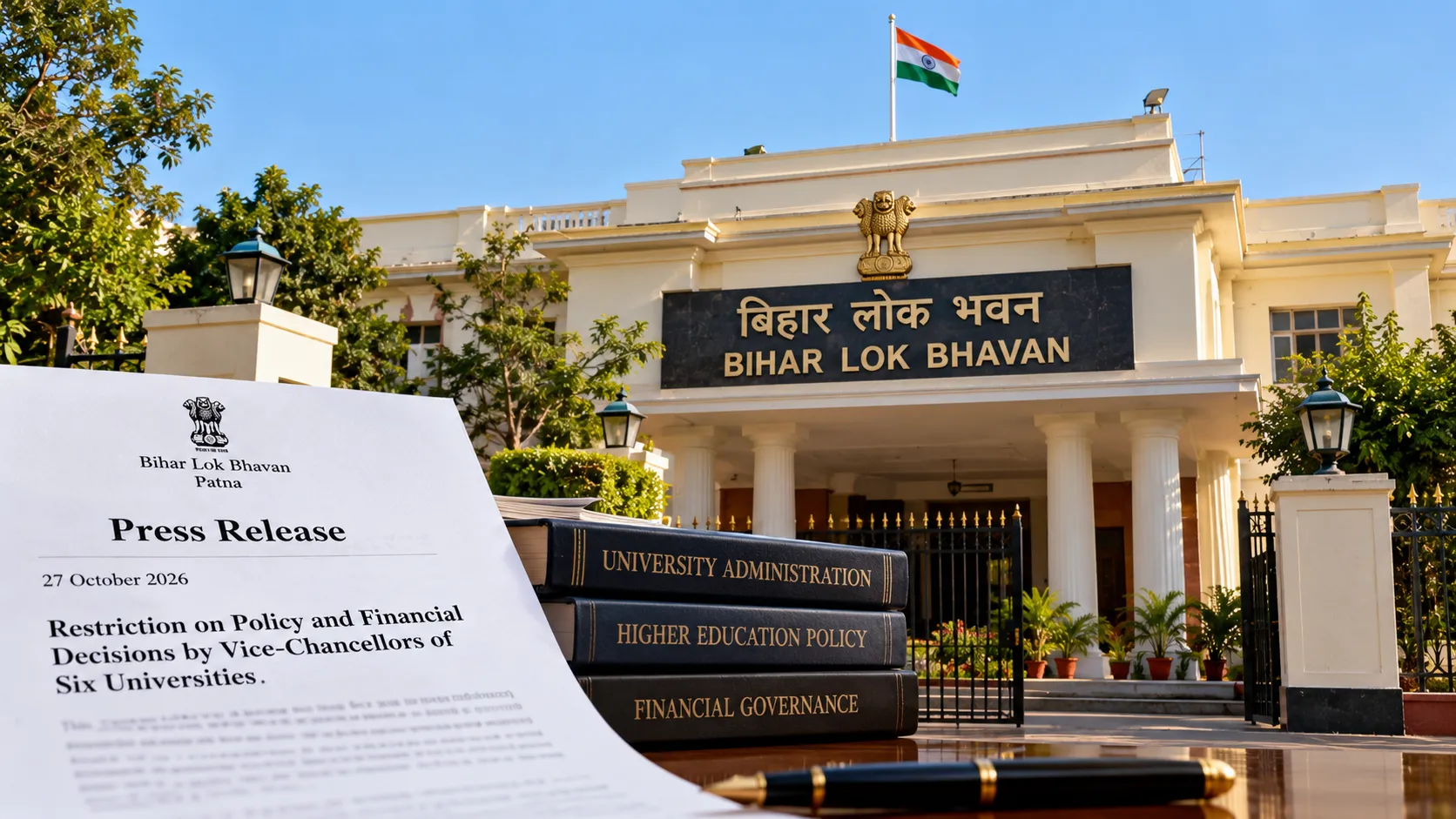
Bihar Lok Bhavan's official press-release page lists an announcement dated 27 October 2026 stating that the Chancellor has prohibited vice-chancellors of six universities from taking policy and financial decisions.
The announcement is important because vice-chancellors occupy a central position in university administration. Their responsibilities can include implementing academic policy, supervising institutional operations and overseeing administrative decisions within the authority provided by the applicable laws and university statutes.
A restriction on policy and financial decisions can therefore affect how universities operate. However, the precise impact depends on the original order, the universities covered, the duration of the restriction and the arrangements made for decisions that cannot be postponed.
What Has Been Confirmed Officially?
The Bihar Lok Bhavan press-release archive identifies the announcement as a decision by the Chancellor concerning six university vice-chancellors. It specifically refers to policy and financial decisions.
This is the core confirmed fact and the appropriate starting point for publication.
Before naming the universities, explaining the legal basis or describing particular restrictions, an editor should obtain and read the complete official order. The wording matters because a general prohibition may operate differently from a temporary restriction covering selected decisions or expenditure.
Why Do Vice-Chancellors' Powers Matter?
Universities are complex institutions. They must manage teaching schedules, examinations, faculty administration, infrastructure, student services, research activities and expenditure.
Policy decisions may influence academic priorities, institutional planning and the implementation of university regulations. Financial decisions may determine whether approved projects proceed, how available funds are used and whether institutions can meet their administrative obligations.
A restriction on these powers may be intended to strengthen oversight, address administrative concerns or ensure that sensitive decisions receive additional scrutiny. Those are possible purposes of such a measure, not confirmed explanations for this particular order unless the official document states them.
For students, the practical questions are straightforward: will examinations continue on schedule, will academic services remain available, and will the decision affect scholarships, appointments or ongoing projects? These effects should be assessed using official university notices rather than speculation.
The Political and Constitutional Context
University administration can become politically sensitive because higher-education institutions operate within legal frameworks involving university statutes, state legislation and, where applicable, national regulatory requirements.
The roles of the Governor, Chancellor, state government, university authorities and regulatory bodies must be distinguished.
Accountability Versus Administrative Independence
There are legitimate public interests on both sides of the wider governance debate.
Public universities must be accountable for the use of funds, compliance with regulations and the quality of their administration. Additional oversight may be justified when there are documented concerns about financial control or the implementation of institutional rules.
What About the Opposition's Position?
The official press-release listing establishes the announcement, but it does not establish a particular response from the opposition or the Bihar government.
A balanced report should not attribute an objection, welcome or allegation to a political party without locating a verifiable statement from that party or a named representative.
What Should Be Checked Next?
Readers and editors should look for five items: the complete Chancellor's order, the names of the six universities, the legal provision cited, the duration and exceptions to the restrictions, and any subsequent clarification issued by Lok Bhavan or the state education department.
It is also important to distinguish the issue of policy decisions from the issue of financial decisions. They may be governed by different procedures and may have different exceptions.
Conclusion: The Original Order Will Determine the Real Impact
Bihar Lok Bhavan's announcement of 27 October 2026 confirms that restrictions have been placed on policy and financial decisions by vice-chancellors of six universities.
Its broader significance lies in the balance between accountability and effective university administration. Strong oversight can help protect public institutions, but unclear responsibilities can create operational difficulties.