Bihar MLC Elections Put Samrat Choudhary, JD(U) Unity and Jan Suraaj Under Spotlight
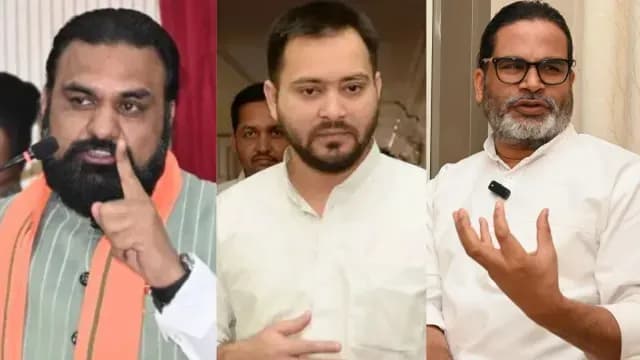
Patna, October 24, 2026: The Bihar Legislative Council elections have brought fresh attention to political coordination within the ruling National Democratic Alliance (NDA), the opposition’s strategy and the expanding electoral role of Prashant Kishor’s Jan Suraaj Party.
Polling for eight council seats concluded on October 23, with counting scheduled for October 27. Although the election will not immediately determine control of the state government, the contest has drawn attention because of disagreements within the Janata Dal (United), divisions among opposition parties and Jan Suraaj’s participation across all eight constituencies.
Samrat Choudhary Faces an Alliance Coordination Challenge
Chief Minister Samrat Choudhary has faced questions about coordination among NDA partners during the council election campaign. Differences involving individual leaders and candidates have complicated efforts to maintain a common position across the alliance.
The Patna Graduates’ constituency became a prominent example of these tensions after JD(U) MLA Anant Singh backed Jan Suraaj candidate Anuj Singh against his own party’s nominee, Neeraj Kumar.
The disagreement has raised questions about party discipline and the ability of alliance leaders to secure support for officially nominated candidates. The eventual results will show how the competing campaigns performed, although the outcome of eight council seats alone cannot determine the wider political standing of the government.
JD(U) Differences Draw Attention
The dispute between Anant Singh and Neeraj Kumar has put internal differences within the JD(U) in the public spotlight.
Neeraj Kumar is seeking another term from the Patna Graduates’ constituency, while Anant Singh has openly supported Anuj Singh. Their disagreement has developed into a significant local contest involving party loyalty, personal political rivalries and the role of Jan Suraaj.
The episode also presents a challenge for the JD(U)’s leadership, which must manage disagreements while maintaining coordination with its NDA partners.
Whether the dispute results in further disciplinary action or changes in local political relationships remains to be seen.
Jan Suraaj Uses the Council Elections to Expand Its Presence
Jan Suraaj, founded by Prashant Kishor, entered the council election contest with candidates in all eight constituencies. The campaign has provided the party with an opportunity to compete beyond its organisational base and engage voters in graduate and teachers’ constituencies.
Its support from Anant Singh in Patna Graduates’ has also brought Jan Suraaj into the centre of an internal dispute within the ruling alliance.
The party’s performance will be assessed through the results declared on October 27. Those results will offer a clearer picture of its support among the specific electorates eligible to vote in these council constituencies, rather than the electorate as a whole.
Opposition Parties Face Their Own Coordination Questions
The opposition’s approach to the council elections has also attracted attention. The absence of a single coordinated candidate strategy across all constituencies has left parties and individual candidates competing in several contests.
RJD leaders have maintained that separate candidates can represent different political constituencies, while Congress representatives have pointed to the distinct nature of Legislative Council elections.
The fragmented contests have made it difficult to assess the opposition’s overall performance before counting. The final results will show how individual candidates and parties translated their support into votes.
What the October 27 Results Could Clarify
The counting will determine the winners of the eight council seats and provide evidence of how candidates performed among graduate and teacher voters.
For the NDA, the results will offer a measure of its coordination across constituencies. For the JD(U), the Patna Graduates’ result will be closely watched because of the dispute between its official candidate and Anant Singh’s camp.
For Jan Suraaj, the results will provide an early measure of its performance in a multi-constituency election. The opposition parties will also have an opportunity to evaluate their candidate-selection and coordination strategies.
Conclusion
Bihar’s MLC elections have become a wider political discussion about alliance coordination, party discipline and the entry of Jan Suraaj into established electoral contests.
The results on October 27 will determine the eight council seats and provide a clearer picture of the candidates’ performance. Any broader conclusions about Bihar’s political landscape will require evidence beyond this limited set of constituencies.
Related Keywords
Join the discussion