Bihar Signs ‘Nadi Sanjivani’ MoU: Samrat Choudhary Government to Use River Silt in Highway Projects
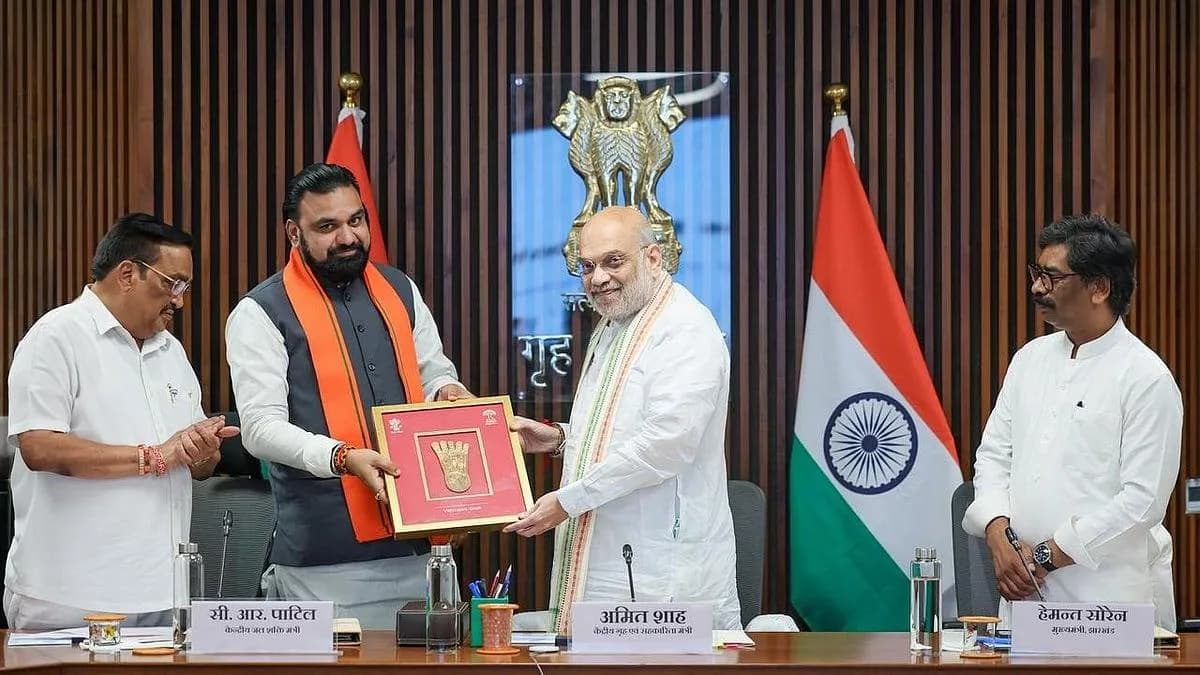
Bihar and Centre Sign Nadi Sanjivani MoU
The Bihar government and the Union Ministry of Road Transport and Highways (MoRTH) signed a Memorandum of Understanding (MoU) on November 3, 2026, to undertake scientific desilting of identified rivers and other water bodies across the state.
The agreement was signed in New Delhi in the presence of Bihar Chief Minister Samrat Choudhary and Union Road Transport and Highways Minister Nitin Gadkari.
The initiative, named Nadi Sanjivani, aims to address two major challenges facing Bihar: recurring floods caused partly by sediment accumulation in rivers and the growing demand for construction material for road infrastructure projects.
Under the arrangement, suitable silt, sand and other excavated material will be tested and utilised in National Highway construction wherever technically appropriate.
More Than 1,000 Lakh Cubic Metres of Silt Identified for Highway Projects
The National Highways Authority of India (NHAI) has identified significant potential for using excavated silt in Bihar's highway infrastructure.
According to the Ministry of Road Transport and Highways' official announcement:
243 lakh cubic metres of suitable silt will be utilised in 16 ongoing National Highway projects.
Another 835 lakh cubic metres is proposed for 27 future projects.
The proposed utilisation is subject to technical suitability and the required approvals.
Together, the official figures amount to approximately 1,078 lakh cubic metres of silt.
The availability of this material is expected to reduce dependence on fresh earth and agricultural soil, help control construction costs and support timely completion of highway projects.
Nadi Sanjivani Aims to Reduce Bihar's Flood Challenges
Bihar regularly faces flooding in several districts, particularly along rivers such as the Kosi, Gandak, Bagmati and Kamla-Balan.
Accumulated sediment can reduce the water-carrying capacity of rivers and water bodies, contributing to drainage difficulties and flood-related damage.
Speaking at the MoU signing ceremony, Nitin Gadkari highlighted the importance of scientific desilting to improve water flow and drainage. He said that the recovered material could become a useful resource for highway construction rather than being treated simply as waste.
The initiative is also expected to support water conservation, improve the condition of water bodies and help protect agricultural land from unnecessary excavation for construction material.
Samrat Choudhary Highlights Bihar's New Silt Management Policy
Chief Minister Samrat Choudhary welcomed the agreement and highlighted the importance of scientific river management for the state's development.
The Bihar government has formulated the Bihar Water Sources Restoration and Silt Management Policy, 2026, which provides a framework for restoring water bodies and managing accumulated sediment.
Choudhary said that Bihar faces recurring floods because of heavy water flows from neighbouring Nepal and other areas. He emphasised that better management of rivers could support flood mitigation, irrigation, drinking-water availability and infrastructure development.
The Chief Minister also highlighted the possibility of using recovered silt in other infrastructure projects, including roads, townships and public facilities.
Bihar Has 39 Ongoing National Highway Projects
The agreement comes at a time when Bihar is witnessing substantial investment in road infrastructure.
According to the official announcement, 39 NHAI projects covering approximately 1,561 kilometres, with an estimated investment of ₹58,340 crore, are currently under construction in the state.
Another 11 projects covering around 1,982 kilometres, with an estimated investment of ₹1,85,200 crore, have been proposed.
The use of suitable excavated silt could help meet part of the construction material requirements of these projects and reduce dependence on agricultural topsoil.
Environmental Safeguards and Monitoring Under the Agreement
The MoU establishes a coordinated mechanism between NHAI and the Bihar government for identifying water bodies, approving desilting proposals and monitoring implementation.
The Bihar government's Road Construction Department will serve as the nodal department, supported by a state-level coordination committee.
Desilting will be carried out only after technical assessments and at approved locations. The agreement also provides safeguards to prevent damage to river ecosystems, riverbanks, embankments, bridges and other structures.
Excavated material will undergo quality testing under applicable MoRTH specifications and Indian Roads Congress codes before being used in highway construction. Digital records, joint measurements and periodic monitoring are intended to ensure transparency.
A New Approach to Infrastructure and Water Management
The Nadi Sanjivani initiative represents an effort to connect river restoration with infrastructure development.
Instead of depending entirely on freshly excavated soil, highway projects may use suitable material recovered from desilting operations. At the same time, the restoration of water bodies could improve drainage and water storage capacity.
The success of the initiative will depend on scientific implementation, environmental safeguards and effective coordination between central and state agencies.
For Bihar, the agreement creates an opportunity to address water-management challenges while supporting its expanding road network.