Bihar Political Clash Escalates: Tejashwi’s Bid to Cancel 2 MLCs’ Membership Rejected, BJP Scores Relief
Bihar Political Clash: Tejashwi’s Move Faces Setback
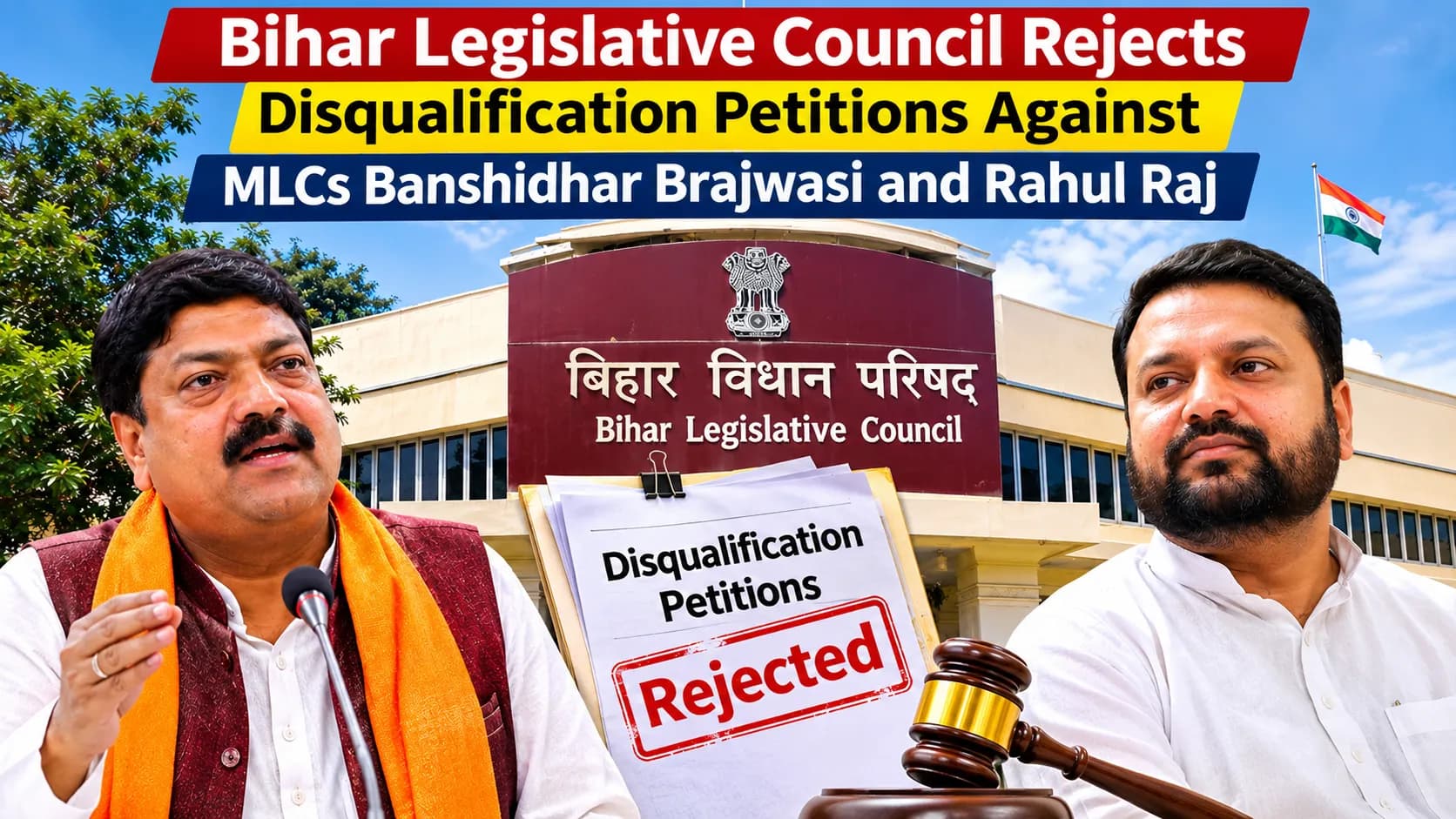
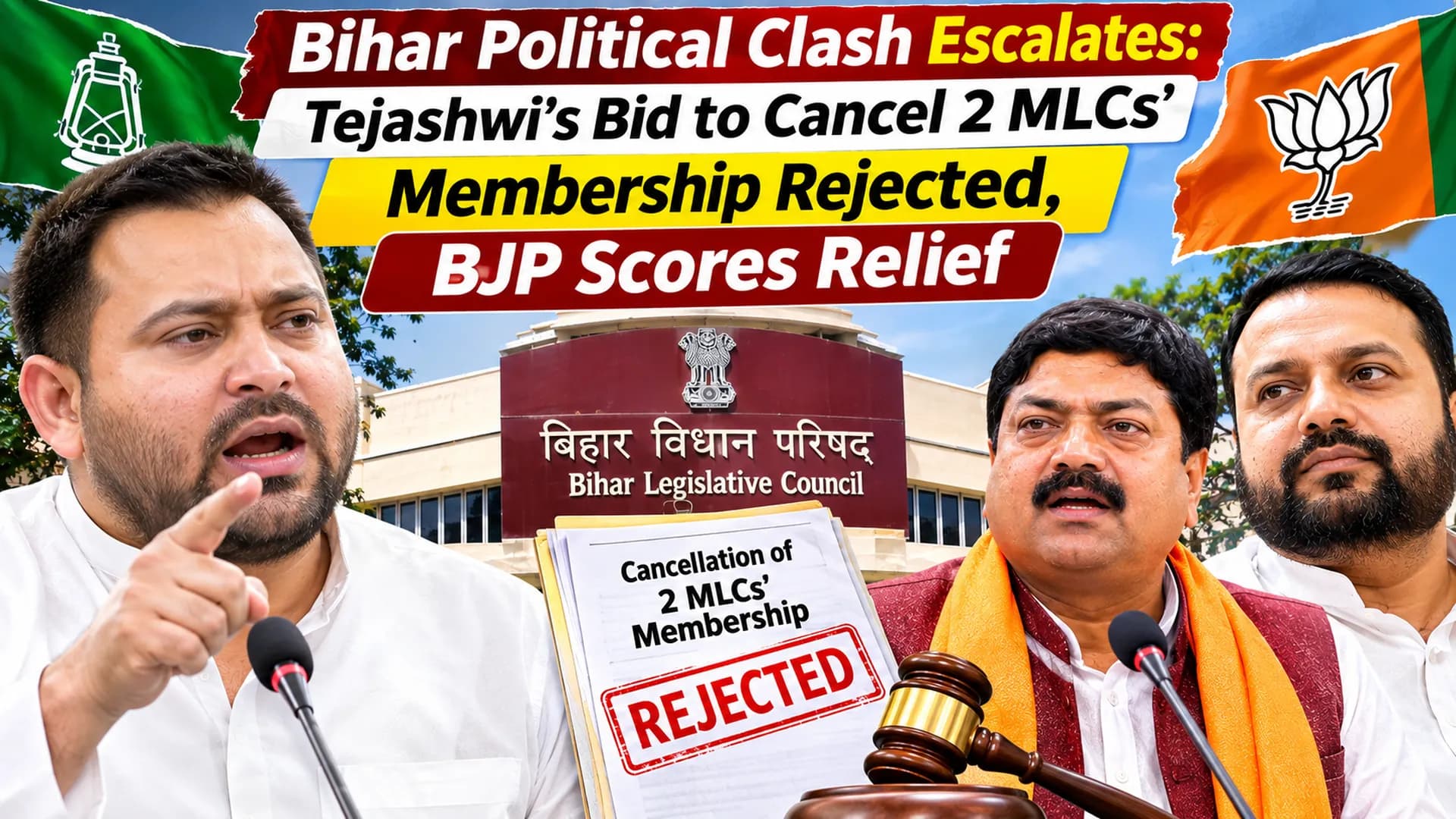
A fresh political confrontation has erupted in Bihar after the Legislative Council’s acting chairman rejected petitions seeking the cancellation of the memberships of two MLCs, Banshidhar Brajwasi and Rahul Raj. The development has become a new flashpoint in the state's political battle, with the dispute revolving around allegations of party switching and the application of anti-defection provisions.
The rejection of the petitions represents an immediate setback for the effort to challenge the legislators’ membership. The issue has placed the political spotlight on the Bihar Legislative Council and raised questions about party loyalty, legislative procedures and the consequences of changing political affiliations.
For the BJP, the decision provides temporary political relief amid the controversy. For the opposition, the dispute remains a politically significant issue that could continue to be raised in the coming days.
What Happened in the MLC Membership Controversy?
The controversy centres on petitions seeking to cancel the memberships of Banshidhar Brajwasi and Rahul Raj. The dispute reportedly followed allegations that the two elected independent members joined the BJP, triggering demands for action under anti-defection-related provisions.
The petitions were presented before the Bihar Legislative Council's acting chairman, who rejected the requests seeking cancellation of their memberships.
The decision has given the two MLCs immediate relief from the membership challenge. However, the broader political debate surrounding their alleged change of affiliation remains a subject of contention.
The case has also highlighted how political movements involving elected representatives can quickly become legislative and legal disputes, particularly when questions arise over party affiliation and the rules governing membership.
Why the Decision Matters for BJP
The rejection of the membership cancellation petitions is a political relief for the BJP. The party and its supporters can view the outcome as a favourable development in a controversy that had created questions about the position of the two MLCs.
The issue is important because legislative numbers, political alliances and the status of elected representatives can influence the broader political balance. Even disputes involving only a small number of legislators can attract significant attention when they involve questions of party strength and political legitimacy.
The decision also gives the BJP an opportunity to counter opposition criticism and shift the political discussion towards the rejection of the petitions.
Tejashwi Yadav and the Opposition’s Political Challenge
The controversy creates another opportunity for Tejashwi Yadav and the opposition to raise questions about political accountability and party switching.
The opposition's position in such disputes generally focuses on whether elected representatives should be allowed to change political affiliations while retaining the benefits of their legislative position. The controversy could therefore become a broader debate about political ethics, voter expectations and the role of anti-defection rules.
For Tejashwi Yadav, the rejection means that the immediate attempt to secure cancellation of the two memberships has not succeeded. But the political issue may not disappear simply because the petitions have been rejected.
Anti-Defection Politics Returns to the Spotlight
The controversy once again brings anti-defection politics into focus in Bihar.
India’s anti-defection framework is designed to address certain forms of political switching by elected representatives. Such cases can involve complex questions about the applicable rules, the facts of a representative's political conduct and the authority responsible for deciding membership disputes.
The Bihar controversy demonstrates how political parties can turn legislative membership questions into larger political battles.
The central issue is not simply whether a representative supports a particular party. It is whether the conduct in question falls within the applicable legal framework and whether the relevant authority has grounds to take action.
A Political Setback or Temporary Relief?
The rejection of the petitions is an immediate development in the dispute, but its political significance may extend beyond the decision itself.
For the BJP, the outcome is a relief and an opportunity to defend its position. For the opposition, the controversy provides a platform to question political movements involving elected representatives.
The dispute could remain politically relevant if either side continues to challenge the decision, raises the issue publicly or uses it in future political exchanges.
What Happens Next?
The immediate outcome is clear: the petitions seeking cancellation of the memberships of Banshidhar Brajwasi and Rahul Raj have been rejected by the Bihar Legislative Council’s acting chairman.
The next developments will depend on whether further legal or procedural steps are taken and how political parties respond to the decision.
The controversy could continue to generate political debate around party affiliation, legislative membership and the interpretation of anti-defection-related provisions.
Conclusion
The rejection of the MLC membership cancellation petitions has given the BJP a political boost while creating a fresh challenge for the opposition in Bihar.
The dispute is more than a question of two legislative memberships. It has become a political contest over party loyalty, legislative authority and the rules governing elected representatives.
As Bihar’s political rivalry continues, the MLC controversy could remain an important talking point for both the ruling alliance and the opposition.