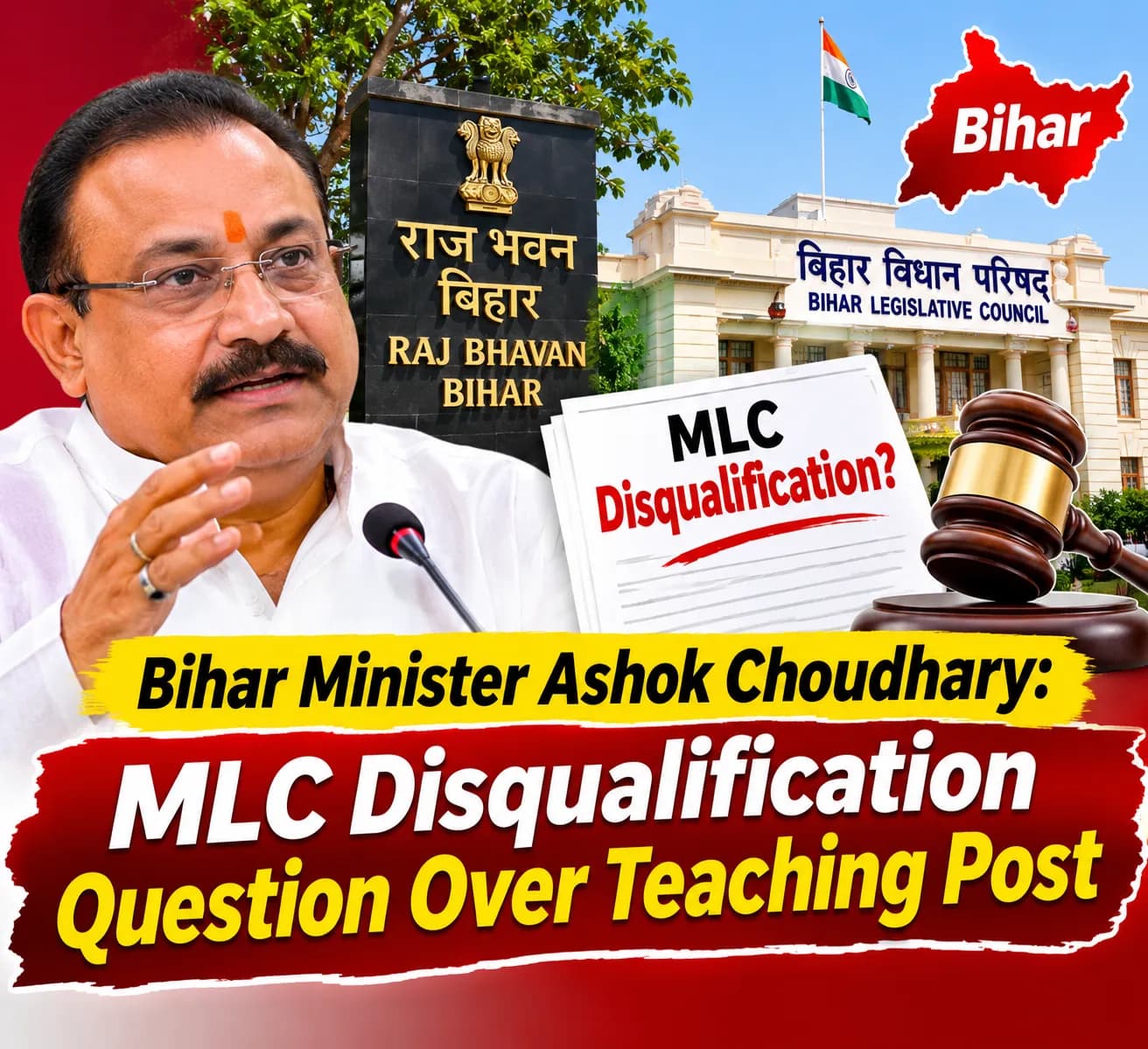
Bihar Minister Ashok Choudhary Faces MLC Disqualification Question Over Teaching Post
Introduction: A New Political and Legal Controversy in Bihar
Bihar's political landscape has witnessed another significant controversy after questions emerged over the legislative membership of state minister Ashok Choudhary.
The issue concerns his appointment as an assistant professor in the Political Science Department of A N College, Patna, while he was already serving as a Member of the Legislative Council (MLC) and a minister.
A communication from the Governor's Secretariat has raised questions about whether the teaching position falls under the constitutional provisions relating to an office of profit.
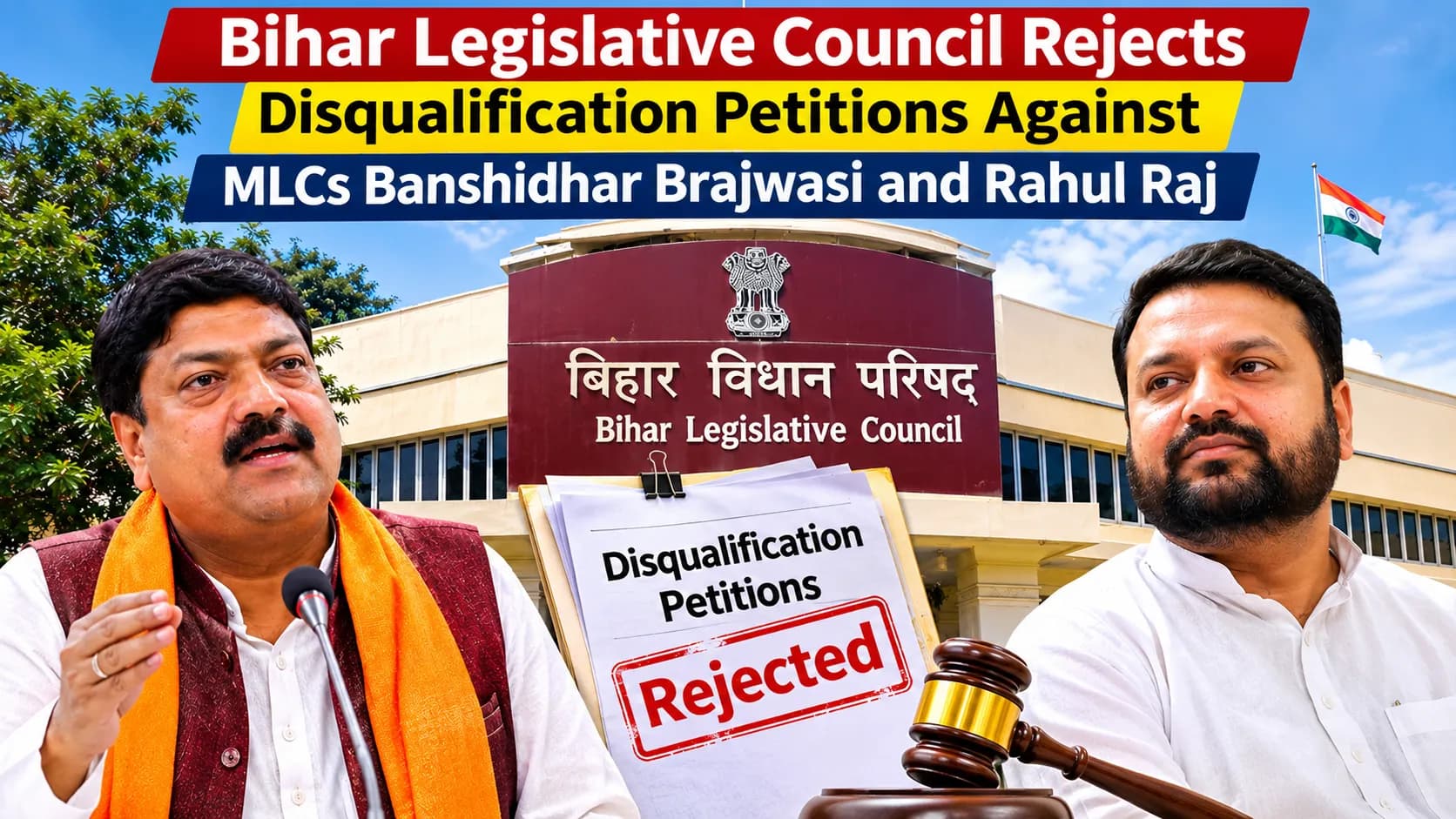
The matter has attracted political and legal attention because the outcome could have implications for Choudhary's membership of the Bihar Legislative Council.
How the Controversy Started
According to reports published on November 15, 2026, Ashok Choudhary joined A N College, which comes under Patliputra University, on February 17.
He was already serving as an MLC and minister at the time of his appointment. He reportedly went on leave the following day to continue his political responsibilities.
The matter subsequently reached the university's Syndicate on August 19.
Following discussions, Vice-Chancellor Upendra Prasad Singh referred the issue to the Governor's Secretariat for clarification regarding Choudhary's entitlement to leave and the legal status of the teaching position.
Raj Bhavan Raises Office of Profit Concerns
A note dated October 31, issued by the Governor's Additional Chief Secretary, Deepak Kumar Singh, raised two important questions.
First, it stated that Choudhary was not entitled to a lien because he was on probation.
Second, it considered the assistant professor's position an office of profit, irrespective of whether he actually received a salary.
The communication also discussed Section 68(2) of the Bihar State Universities Act, 1976.
This provision concerns special leave for university employees who are elected to legislative bodies. The note questioned whether the provision applied to someone who became a legislator before subsequently joining a university as a teacher.
Ashok Choudhary Responds to the Observations
Ashok Choudhary reportedly described the Raj Bhavan observations as motivated.
He referred to instances in other Bihar universities where employees had received lien during probation.
He also argued that the relevant university law should be interpreted in accordance with its legislative purpose.
Political Implications for Bihar
The controversy has added another issue to the political discussion surrounding the ruling establishment in Bihar.
The matter is particularly significant because it involves a serving minister, university administration and constitutional questions relating to legislative membership.
Opposition parties may use the development to raise questions about transparency, eligibility and the responsibilities of public representatives.
What Happens Next?
The Advocate General's opinion and any subsequent decision by the Legislative Council Chairman will be important developments.
Until an official decision is made, Choudhary's possible disqualification must be treated as a pending issue rather than an established outcome.
Conclusion
The Ashok Choudhary controversy highlights the importance of clearly defining the relationship between university employment and legislative responsibilities.
The issue now involves constitutional interpretation, university regulations and the authority of the Legislative Council.
The next institutional decision will determine how the matter proceeds.