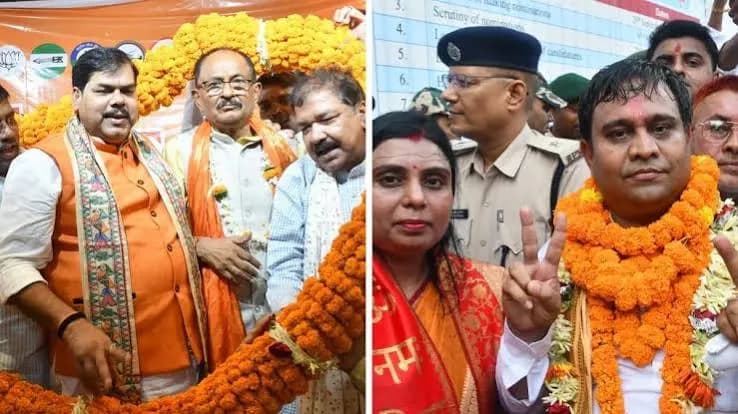
Vidhan Sabha
The Bihar Vidhan Sabha, officially known as the Bihar Legislative Assembly, is the elected lower house of the Bihar Legislature. It represents the people of Bihar through elected Members of the Legislative Assembly (MLAs) from 243 Assembly constituencies.
The Legislative Assembly plays a central role in the democratic and legislative functioning of Bihar. Its responsibilities include making laws on matters under the state's jurisdiction, discussing public issues, approving the state budget, examining government policies, and holding the Council of Ministers accountable to the elected representatives.
State
Bihar
Assembly Name
Bihar Legislative Assembly
Official Name
Bihar Vidhan Sabha
Total Seats
243
The Bihar Legislative Assembly has 243 elected seats. Each seat represents a territorial Assembly constituency within the state.
Current Term
18th Bihar Legislative Assembly
The present Assembly is the 18th Legislative Assembly of Bihar. Members were elected in the Bihar Legislative Assembly Election held in November 2025. The election covered all 243 Assembly constituencies.
Chief Minister
Samrat Choudhary
Samrat Choudhary became Chief Minister of Bihar on 15 April 2026. The Chief Minister heads the Council of Ministers and leads the state government.
Ruling Party
Bharatiya Janata Party-led National Democratic Alliance (BJP-led NDA)
The current Bihar government is led by the Bharatiya Janata Party as part of the National Democratic Alliance. The government is formed through the coalition's legislative support in the Bihar Legislative Assembly.
Speaker
Dr. Prem Kumar
The Speaker is the presiding officer of the Bihar Legislative Assembly. The Speaker conducts Assembly proceedings, maintains order during debates, decides procedural matters and performs responsibilities provided under the Constitution and Assembly rules.
Leader of Opposition
Tejashwi Prasad Yadav
The Leader of the Opposition represents the principal opposition in the Bihar Legislative Assembly. The position involves participating in legislative debates, raising issues concerning government policies and providing an opposition perspective on matters discussed in the House.
Opposition Party
Rashtriya Janata Dal (RJD)
The Rashtriya Janata Dal is the principal opposition party represented in the current Bihar Legislative Assembly.
Next Election
The 2025 Bihar Legislative Assembly election has already been completed and resulted in the formation of the 18th Bihar Legislative Assembly. The next regular Assembly election is expected after the completion of the current Assembly's normal term, subject to constitutional provisions, dissolution or any other change in the Assembly's status.
History of Bihar Vidhan Sabha
The Bihar Legislative Assembly has played an important role in the political and administrative history of the state. Bihar became a separate province in 1912, and legislative institutions developed during the period of British administration.
After India became independent, Bihar's legislative institutions were reorganized under the Constitution of India. The Bihar Legislative Assembly became an important institution of representative government in the state.
Over the decades, the Assembly has witnessed changes in political parties, governments, leadership, social representation and public policy. Members elected from different regions and communities have participated in debates concerning agriculture, education, healthcare, infrastructure, employment, law and order, rural development and other issues affecting Bihar.
Composition of the Bihar Legislative Assembly
The Bihar Legislative Assembly consists of 243 elected members. Each MLA represents one Assembly constituency.
Members are elected directly by voters through elections conducted by the Election Commission of India. The candidate receiving the highest number of valid votes in an Assembly constituency is generally declared elected under the first-past-the-post electoral system.
The Assembly's composition can change after elections, by-elections, resignations, disqualifications and other constitutional or legal developments.
Role of Members of Legislative Assembly
Members of the Legislative Assembly represent their constituencies in the state legislature.
An MLA can participate in debates, introduce or support legislative proposals, ask questions to ministers, raise constituency issues, participate in committees and examine government expenditure and policies.
MLAs also act as an important connection between citizens and the state government by bringing local concerns into the legislative process.
How the Bihar Assembly Works
The Bihar Legislative Assembly conducts its business through sessions summoned according to constitutional provisions. During Assembly sessions, members discuss bills, budgets, government policies, public issues and matters of importance to the state.
The Speaker presides over proceedings and ensures that Assembly rules are followed.
Members may raise questions, participate in debates, introduce legislative proposals where permitted and take part in voting on matters before the House.
Role of the Speaker
The Speaker has a central role in managing Assembly proceedings.
The Speaker presides over meetings of the House, maintains discipline and order, allows members to participate according to Assembly rules and decides various procedural matters.
The Speaker also performs constitutional and parliamentary responsibilities relating to the functioning of the Legislative Assembly.
Role of the Chief Minister
The Chief Minister is the head of the elected state government.
The Chief Minister leads the Council of Ministers and coordinates the functioning of different departments of the Bihar government. The Chief Minister also represents the government in the Legislative Assembly and responds to important legislative and policy matters.
The Council of Ministers is collectively responsible to the Legislative Assembly.
Role of the Opposition
The opposition plays an important role in the functioning of a legislative democracy.
Opposition members examine government policies, question ministers, participate in debates and raise issues concerning their constituencies and the public.
The opposition also provides an alternative viewpoint during discussions on legislation, government expenditure, development programmes and administrative decisions.
Question Hour
Question Hour provides MLAs with an opportunity to seek information from the government.
Members can ask questions concerning government departments, schemes, expenditure, development projects, administration and public services. Ministers provide answers on behalf of the government.
Question Hour can help bring specific public issues into the Assembly and place information on government activities before the House.
Legislative Functions
One of the major responsibilities of the Bihar Legislative Assembly is considering and passing laws on matters within the legislative powers of the state.
Bills are discussed in the Assembly according to constitutional provisions and legislative procedures. Members can debate the provisions of a bill and propose amendments where permitted.
After completion of the required legislative process, a bill may be sent to the Governor for consideration and assent according to constitutional provisions.
State Budget
The Bihar Legislative Assembly plays an important role in the approval of the state's financial proposals.
The state budget presents estimated government receipts and expenditure for a financial year. Members discuss demands for grants, taxation proposals and government spending.
The Assembly's financial powers are an important part of legislative oversight because government expenditure must operate within the constitutional and legal framework governing state finances.
Money Bills
Money Bills are subject to special constitutional procedures.
In a state, a Money Bill can be introduced only in the Legislative Assembly, subject to the provisions of the Constitution. The Legislative Council, where one exists, has a limited role in relation to Money Bills.
Bihar has a bicameral legislature consisting of the Legislative Assembly and the Legislative Council.
Bihar's Two-House Legislature
Bihar is one of the Indian states with a bicameral legislature.
The Bihar Legislature consists of:
Bihar Legislative Assembly
Bihar Legislative Council
The Legislative Assembly is the directly elected House, while the Legislative Council is the upper House with members chosen through different methods provided by the Constitution.
The two Houses perform different constitutional and legislative functions.
Assembly Committees
Legislative committees help the Assembly examine government work in greater detail.
Committees can examine bills, government expenditure, departmental activities, reports and other matters referred to them under Assembly procedures.
Committee work allows legislators to examine specific subjects in greater detail than may be possible during general Assembly debates.
Representation of Bihar's Constituencies
The 243 Assembly constituencies cover different geographical areas of Bihar.
Each constituency elects one MLA. The elected representatives collectively form the Bihar Legislative Assembly.
Constituencies include urban areas, rural areas and regions with different social and economic characteristics. Assembly representation therefore provides a mechanism for bringing local and regional issues into the state legislature.
Major Issues Discussed in the Bihar Assembly
The Bihar Legislative Assembly regularly deals with issues connected with the state's development and administration.
Important areas of discussion can include:
Education
Healthcare
Agriculture
Irrigation
Rural development
Urban development
Employment
Industrial development
Roads and transport
Electricity
Water supply
Law and order
Social welfare
Panchayati Raj
Women and child development
Infrastructure
State finances
Government schemes
Members may raise these subjects through questions, debates, motions, committee work and other legislative procedures.
Bihar Assembly and Public Accountability
The Legislative Assembly provides an institutional mechanism for holding the elected government accountable.
Ministers are required to respond to questions and participate in legislative proceedings. Government expenditure is examined through the budgetary process and legislative committees.
This system allows elected representatives to seek information and discuss the performance of government departments.
Elections to the Bihar Legislative Assembly
Assembly elections in Bihar are conducted by the Election Commission of India.
The state is divided into 243 Assembly constituencies. Voters in each constituency elect their representative.
Assembly elections are normally held at the end of the Assembly's five-year term unless the House is dissolved earlier or the term is extended in accordance with constitutional provisions.
The election process includes nomination of candidates, scrutiny, withdrawal where applicable, campaigning, polling, counting and declaration of results.
Term of the Legislative Assembly
Under the Constitution, the normal term of a State Legislative Assembly is five years from the date appointed for its first meeting, unless dissolved earlier.
The term may be affected by constitutional provisions concerning dissolution or exceptional circumstances.
The completion of an election results in the formation of a new Assembly.
Importance of Bihar Vidhan Sabha
The Bihar Vidhan Sabha is one of the state's most important democratic institutions.
It provides representation to people from all parts of Bihar and creates a formal platform for discussing legislation, public expenditure, government policies and constituency concerns.
The Assembly also connects elections with government accountability because the Council of Ministers is collectively responsible to the Legislative Assembly.
Bihar Vidhan Sabha and Democracy
The functioning of the Bihar Legislative Assembly reflects the principles of representative democracy.
Citizens elect MLAs, elected representatives participate in the legislative process, the government presents policies and financial proposals, and opposition members examine government actions.
Through these processes, the Assembly provides a constitutional framework for representation, debate, lawmaking and accountability.
Conclusion
The Bihar Vidhan Sabha is the principal directly elected legislative institution of Bihar. With 243 Assembly constituencies, it represents voters across the state and plays a central role in legislation, budgeting, government oversight and public debate.
The Assembly's functioning involves the Speaker, Chief Minister, Council of Ministers, opposition parties, individual MLAs and legislative committees. Together, these institutions form an important part of Bihar's constitutional and democratic system.
For citizens, understanding the Bihar Vidhan Sabha makes it easier to understand how state laws are made, how the government is questioned, how public money is discussed and how elected representatives participate in the governance of Bihar.
Vidhan Sabha News
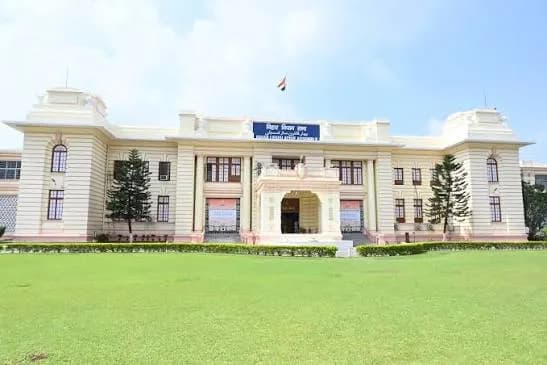
How the Bihar Vidhan Sabha Works
A plain-language introduction to constituencies, MLAs, questions, debates and state legislation in Bihar.
By isha patil • 804 views