Video Campaign Creation • Voter Turnout Management • Political Campaign Management • Political Social Media & Digital Marketing • Live Streaming • Audio Campaign Creation • Facebook Marketing • Website • GST • IT • Software • Tax Consultant • Advertisement • Digital Marketing
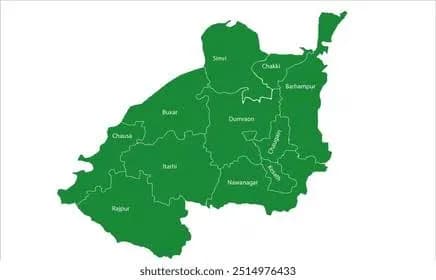
Buxar is a historic district in western Bihar, situated along the River Ganga near the Uttar Pradesh border. Known for the historic Battle of Buxar, its religious heritage and its connection with freedom fighter Veer Kunwar Singh, the district has a predominantly agricultural economy and an important place in Bihar's history.
Headquarters
Buxar
Division
Patna Division
Established
1991
Area
1624 sq. km
Population
1706352 (Census 2011)
Lok Sabha
Buxar
Vidhan Sabha
Brahmpur
Buxar
Dumraon
Rajpur (SC)
Buxar District, Bihar
Overview
Buxar is a historically significant district in western Bihar, known for its association with the Battle of Buxar, its religious heritage and its location along the River Ganga. The district headquarters is Buxar town, which serves as an important administrative, commercial and transportation centre. Buxar shares its western and northern regional connections with Uttar Pradesh and forms part of Patna Division.
History and Heritage
Buxar has a long historical and cultural heritage. The district is particularly associated with the Battle of Buxar, fought on 22 October 1764 between the forces of the British East India Company and the combined armies of the Mughal emperor Shah Alam II, Nawab Shuja-ud-Daula of Awadh and Mir Qasim, the former Nawab of Bengal. The British victory strengthened the Company's political and territorial influence in eastern India.
Buxar also has religious and mythological associations with ancient traditions. Local heritage connects the region with sages, sacred sites and stories from Hindu traditions. These historical and cultural connections continue to influence the district's identity.
The present Buxar district was established in 1991 after being separated from the former Bhojpur district. Its administrative formation gave the region a separate district headquarters and administrative structure.
Geography and Administration
Buxar is situated in western Bihar, along the River Ganga. The district borders Bhojpur to the east, Rohtas to the south and parts of Uttar Pradesh to the north and west.
According to the official district administration, Buxar covers approximately 1,624 square kilometres. The district has two subdivisions: Buxar Sadar and Dumraon. Its administrative structure includes 11 community development blocks that support local governance and public service delivery.
The Ganga and Karmanasa rivers are important geographical features of the region. The surrounding plains support agriculture, settlement and transportation.
Population and Demographics
According to the Census of India 2011, Buxar district had a population of 1,706,352. The district includes urban centres, towns and rural villages. Hindi and Bhojpuri are widely used in everyday communication, reflecting the cultural identity of the wider Bhojpuri-speaking region.
Agriculture, small businesses, trade, transportation and public services are important sources of livelihood for residents. Buxar town serves as a central location for administrative services and commercial activity.
Economy and Agriculture
Agriculture is a major component of the district's economy. The fertile alluvial plains support the cultivation of rice, wheat, maize, pulses and other seasonal crops. Farming provides livelihoods for many rural households and contributes to local markets.
Trade in agricultural produce, retail businesses, transport services, small-scale enterprises and local industries also contribute to economic activity. Improving irrigation, rural roads, storage facilities and market access can support farmers and strengthen the district's rural economy.
Political Significance
Buxar has an important role in Bihar's political and electoral landscape. The district includes the Buxar Lok Sabha constituency and four Bihar Legislative Assembly constituencies.
The Assembly constituencies are Brahmpur, Buxar, Dumraon and Rajpur (Scheduled Caste reserved). These constituencies represent local communities in the Bihar Legislative Assembly and provide a channel for raising regional concerns and development priorities.
Political discussions in the district often involve agricultural support, employment, road connectivity, education, healthcare, irrigation, rural development and access to public services. Election campaigns and constituency-level representation contribute to the district's political life.
Culture and Traditions
Buxar is part of the culturally rich Bhojpuri-speaking region of Bihar. Folk songs, traditional festivals, regional cuisine and community celebrations are important aspects of local life.
The district's cultural identity reflects a combination of religious traditions, historical events and rural customs. Bhojpuri language and cultural practices connect Buxar with neighbouring districts of Bihar and eastern Uttar Pradesh.
Tourism and Religious Attractions
Buxar offers historical and religious attractions for visitors. Ramrekha Ghat along the Ganga is an important local religious destination. The district is also associated with the historic Battle of Buxar and several temples and traditional pilgrimage sites.
The town attracts visitors interested in religious observances, riverfront traditions and regional history. Historical interpretation, improved visitor facilities and heritage conservation can support the development of local tourism.
Education and Healthcare
Buxar has schools, colleges and public institutions that serve students from the district and surrounding rural areas. Buxar town is an important centre for educational and administrative services.
Healthcare facilities include government health centres and hospitals, alongside private medical services. Continued investment in education, healthcare infrastructure, vocational training and employment opportunities is important for the district's long-term development.
Transport and Connectivity
Buxar is connected to other parts of Bihar and Uttar Pradesh through road and railway networks. Buxar railway station provides connections to regional and major railway routes. Road transport links the district headquarters with nearby towns, villages and commercial centres.
Its location near the Uttar Pradesh border supports regional movement of people and goods. Transport connectivity is important for agricultural trade, access to public services, education, tourism and employment.
Development and Public Priorities
Important development priorities for Buxar include agricultural productivity, irrigation, rural infrastructure, employment generation, education, healthcare and improved public services. Better market facilities and transportation can support farmers and small businesses.
The district's historical and religious significance also creates opportunities for heritage tourism. Responsible tourism development, preservation of historical sites and improvement of visitor facilities can help strengthen the local economy.
Buxar District Today
Buxar combines a significant historical legacy with an agricultural economy and a distinctive Bhojpuri cultural identity. Its association with the Battle of Buxar, its location along the Ganga and its role in Bihar's political representation make it an important district in the state's historical and contemporary landscape.
Contact Us
We're here to listen
Reach our editorial and support team for questions, feedback, corrections, story ideas and collaboration opportunities.